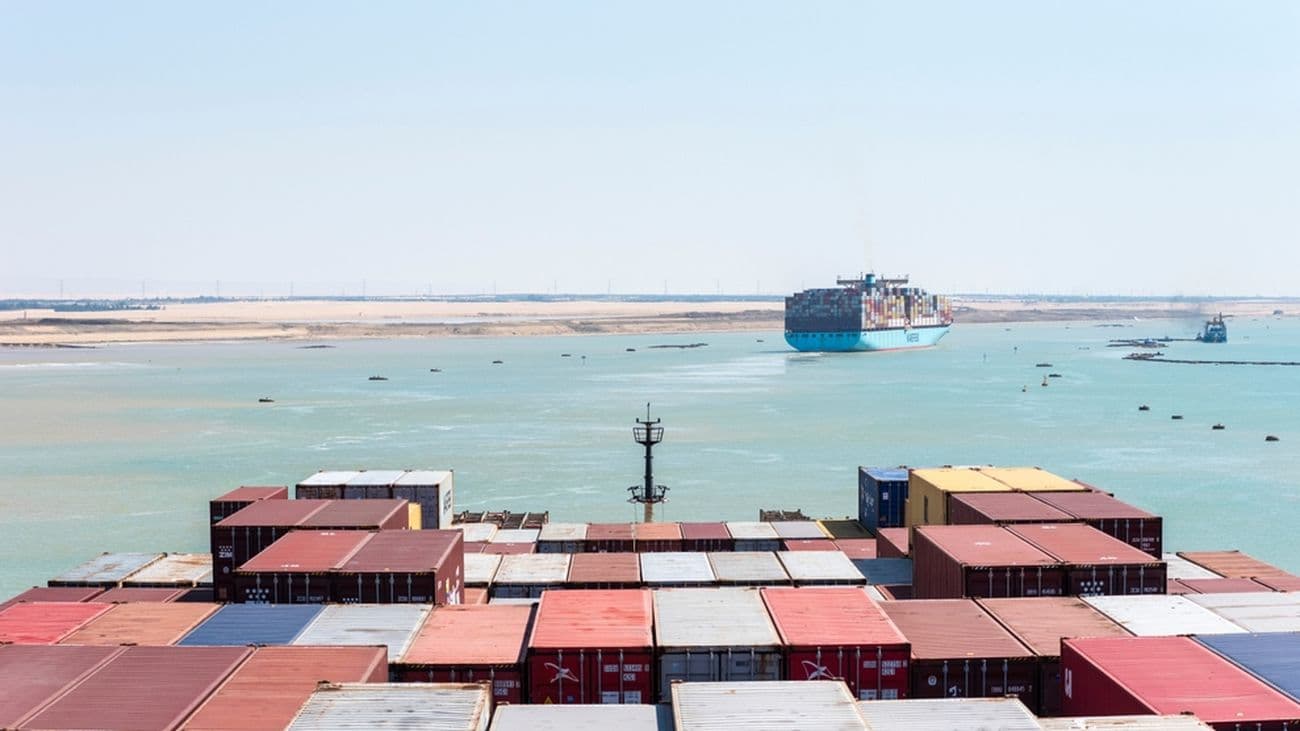
Container vessel traffic through the Suez Canal has now reached more than half of the levels observed prior to recent regional disruptions. This milestone signifies that shipping lines are increasingly opting to utilize the Red Sea routing once again, rather than diverting around the Cape of Good Hope.
For freight forwarders and operations managers, this development suggests a continued normalization of transit times for Asia-Europe trade lanes. Increased Suez Canal usage typically leads to shorter voyages compared to the longer Cape route, potentially improving schedule reliability and reducing fuel costs for carriers. This could translate to more stable or even slightly reduced ocean freight rates on affected lanes, as capacity utilization becomes more efficient. However, the full impact on rates will depend on overall market demand and the extent of continued security measures.
While the article does not specify the exact nature of the "disruption," it is widely understood that the Red Sea crisis, involving Houthi attacks, significantly impacted Suez Canal transits. The current recovery indicates a degree of improved security or a strategic decision by carriers to manage the associated risks, possibly due to evolving security escorts or a re-evaluation of the cost-benefit of longer routes. The trend suggests a cautious but accelerating return to the traditional, shorter Asia-Europe trade route.