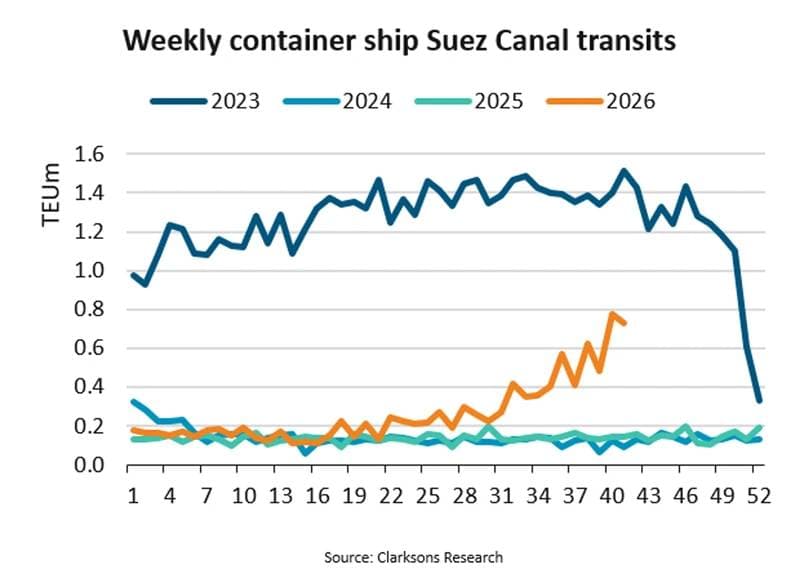
Container ship capacity utilizing the Suez Canal saw an average of 753,000 TEU per week during the initial two weeks of October. This figure, reported by Clarksons Research, represents a substantial reduction compared to the 1.457 million TEU recorded in the corresponding period of 2023. The persistent threat of Houthi attacks in the Red Sea region continues to influence carrier routing decisions.
For freight forwarders and operations managers, this data highlights the ongoing impact of geopolitical instability on global shipping lanes. While there's a slight increase in Suez Canal transits compared to the lowest points of disruption, the overall capacity remains significantly depressed. This implies that longer transit times via the Cape of Good Hope are still prevalent for many services, affecting lead times and potentially increasing fuel costs. Forwarders should continue to factor in these extended routes and associated surcharges when quoting and planning shipments, especially for Asia-Europe trade lanes. The reduced Suez capacity also suggests that vessel availability and schedule reliability on affected routes may remain volatile, requiring proactive communication with shippers regarding potential delays and alternative options.