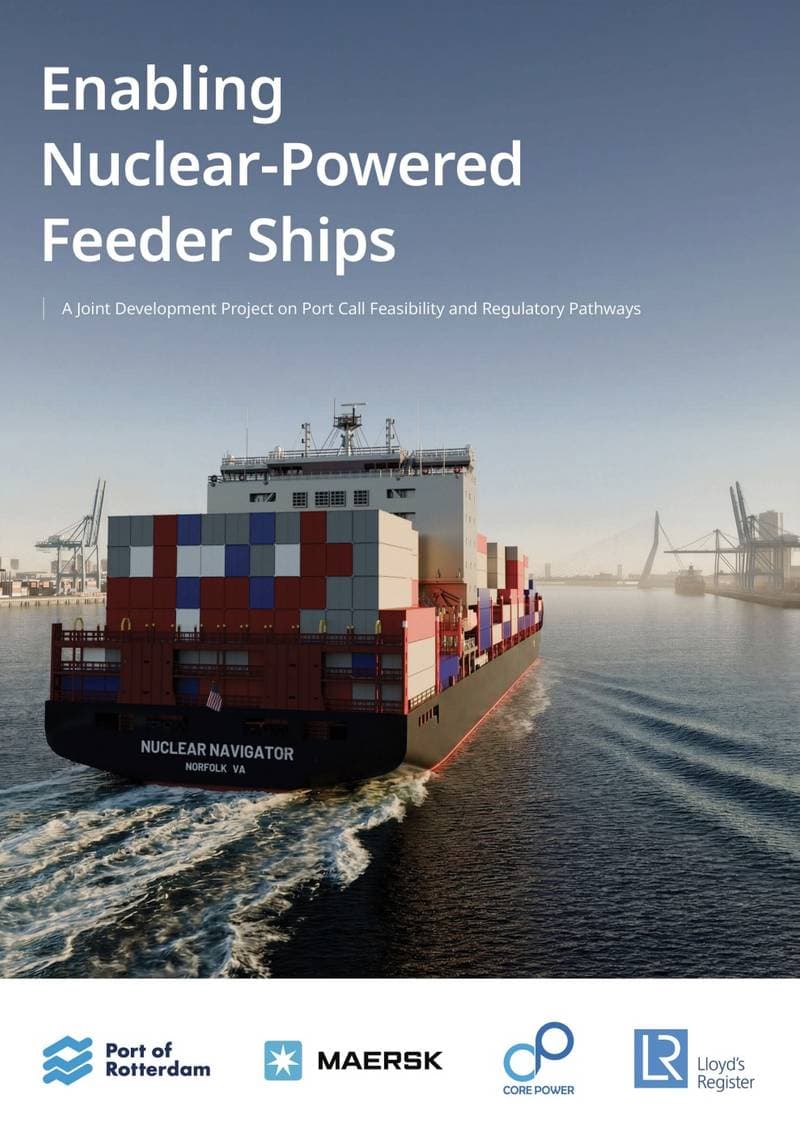
A recent joint study, titled "Enabling Nuclear-Powered Feeder Ships: A Joint Development Project on Port Call Feasibility and Regulatory Pathways," has concluded that current port safety and risk management protocols are largely adequate for handling nuclear-powered commercial vessels. The Port of Rotterdam served as the primary case study for this research, which aimed to assess the practicalities of port calls and the regulatory landscape required for these advanced ships.
For freight forwarders and operations managers, this development suggests a potential future shift in maritime transport, offering a more sustainable and potentially more stable energy source for feeder services. While widespread adoption is still distant, the study's findings could influence long-term infrastructure planning and regulatory adjustments. The integration of nuclear-powered vessels could eventually impact bunker fuel demand, operational costs, and potentially lead to new routing efficiencies, though initial implementation would likely involve strict safety and security protocols, potentially affecting turnaround times.