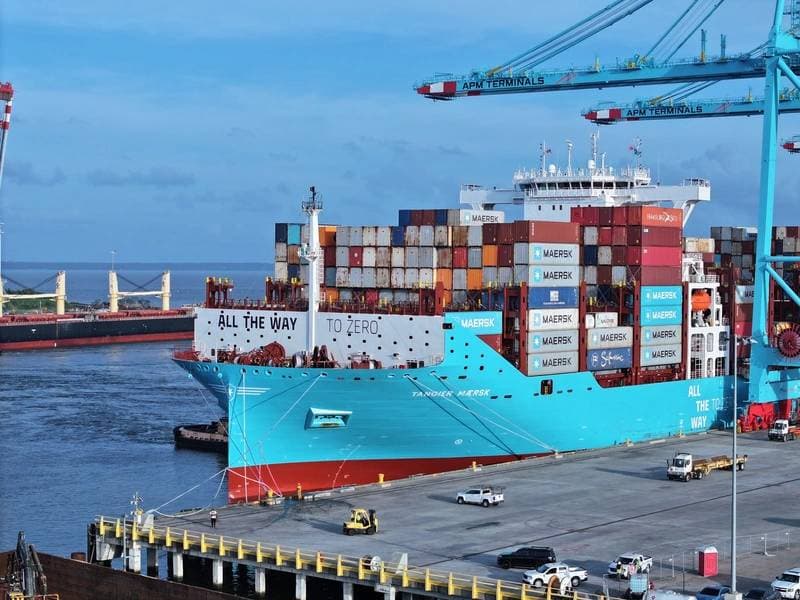
The container ship Tangier Maersk, part of the Maersk fleet and with a capacity of 9,000 TEU, recently achieved a milestone by completing its first operational voyage using ethanol as fuel. This journey took place on a U.S. route, following a successful bunkering operation. The vessel is equipped with WinGD's X-DF-M/E alcohol fuel engine platform, which facilitated this pioneering use of ethanol.
This development is significant as the maritime industry seeks viable pathways to reduce its carbon footprint. Ethanol, as an alternative fuel, offers a potential solution for decarbonization, particularly for container vessels operating on specific trade lanes. The successful trial demonstrates the technical feasibility of using ethanol in large-scale shipping operations.
For freight forwarders and shippers, the increasing adoption of alternative fuels like ethanol by major carriers such as Maersk signals a shift towards more sustainable shipping options. While immediate rate impacts are unlikely, this trend could lead to the development of 'green corridors' and potentially influence future carbon levies or surcharges. Forwarders should monitor these developments as they may offer more environmentally friendly choices for clients, aligning with growing sustainability demands in supply chains. It also highlights the ongoing investment by carriers in new propulsion technologies to meet future environmental regulations.
This successful operation paves the way for further evaluation and potential expansion of ethanol as a marine fuel, contributing to the broader industry goal of achieving net-zero emissions.