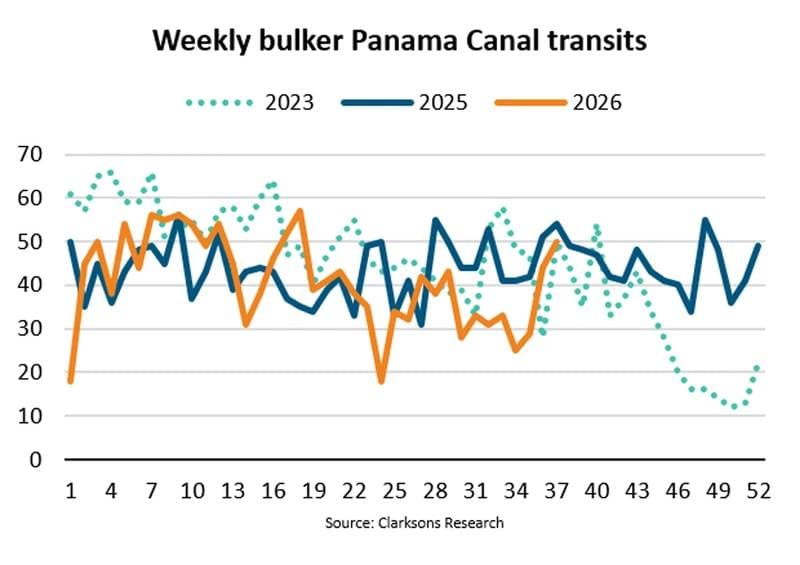
Since the beginning of July, the number of bulk carrier transits through the Panama Canal has seen a significant reduction of 22% compared to the previous year. This decrease is primarily a result of increased competition for available transit slots from other vessel types, notably tankers. The rise in US energy exports destined for Asian markets has led to a greater demand for tanker transits, thereby limiting the capacity for bulk carriers.
Adding to these operational challenges, the El Niño weather phenomenon is expected to contribute to lower water levels within the canal. Reduced water levels can further restrict the draft of vessels able to transit, potentially leading to longer queues, increased transit times, or even diversions for some ships.
For freight forwarders and operations managers, this situation implies potential disruptions and increased costs for shipments utilizing the Panama Canal, particularly for dry bulk cargo. Forwarders should anticipate longer lead times and potentially higher surcharges for routes involving the canal. It may be prudent to explore alternative routing options or modes for time-sensitive or bulk shipments to mitigate the impact of reduced slot availability and potential draft restrictions. Shippers of commodities typically moved by bulk carriers, such as grains, coal, and iron ore, should prepare for supply chain adjustments.