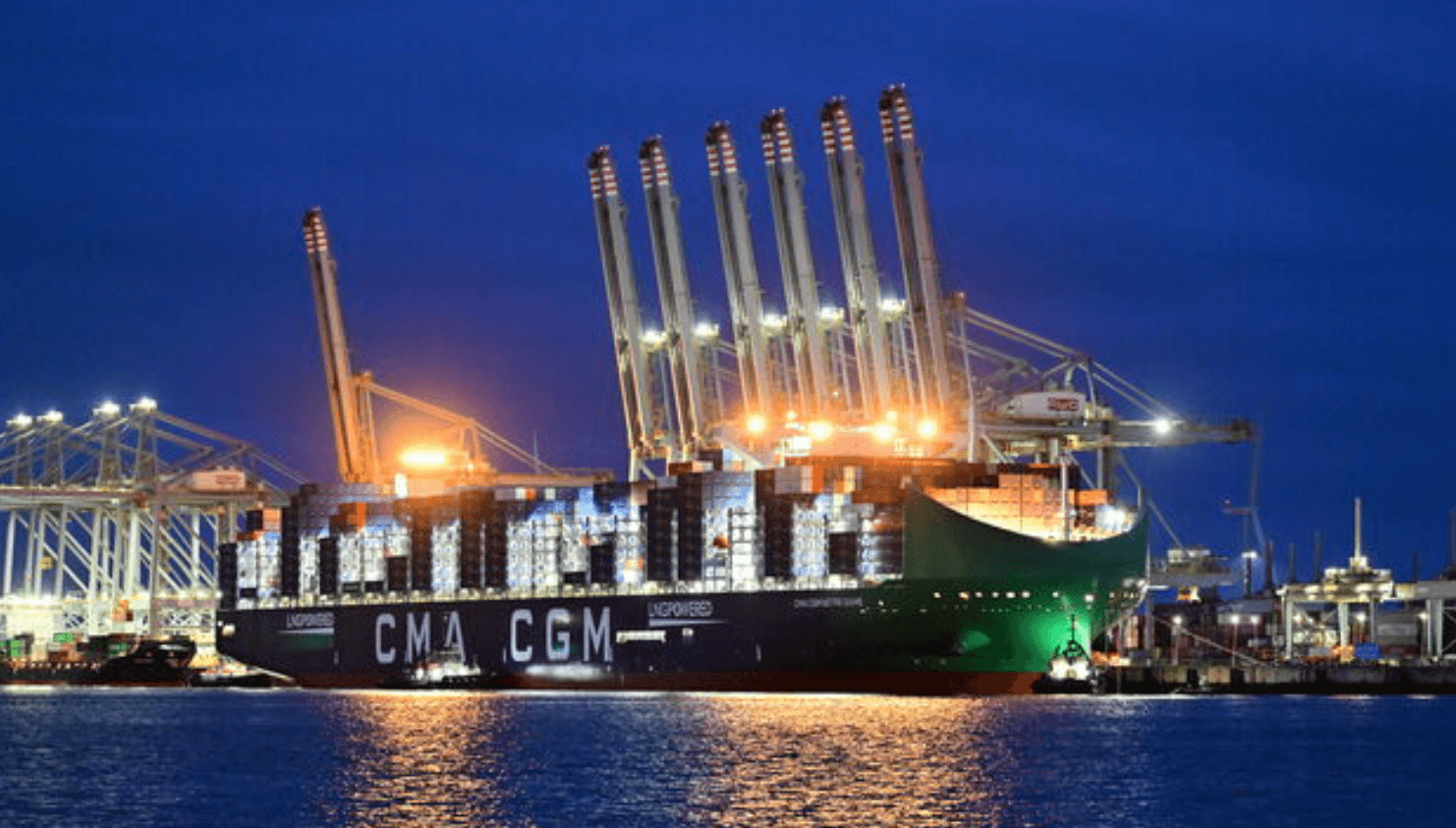
The CMA CGM Notre Dame, a large container vessel with a capacity of 24,212 TEU, recently completed its maiden voyage to the Port of Rotterdam. During this visit, the vessel underwent its first bunkering operation using bio-liquefied natural gas (LNG). This initiative underscores CMA CGM's commitment to utilizing cleaner marine fuels as part of its environmental strategy.
The Notre Dame is deployed on the French Asia Line, a key trade route connecting Asia with Europe. The use of bio-LNG on such a significant vessel highlights the increasing adoption of alternative fuels in the maritime industry to reduce carbon emissions. Rotterdam's role in facilitating this bunkering operation further solidifies its position as a leading port for sustainable shipping practices and advanced bunkering infrastructure.
For freight forwarders and operations managers, the deployment of vessels like the CMA CGM Notre Dame with bio-LNG bunkering capabilities signifies a gradual shift towards more sustainable supply chains. While the immediate impact on freight rates or capacity might be minimal, it indicates a long-term trend towards greener shipping options, which could eventually influence carrier choices and compliance with future environmental regulations. Shippers may increasingly seek carriers demonstrating such commitments to meet their own sustainability targets.