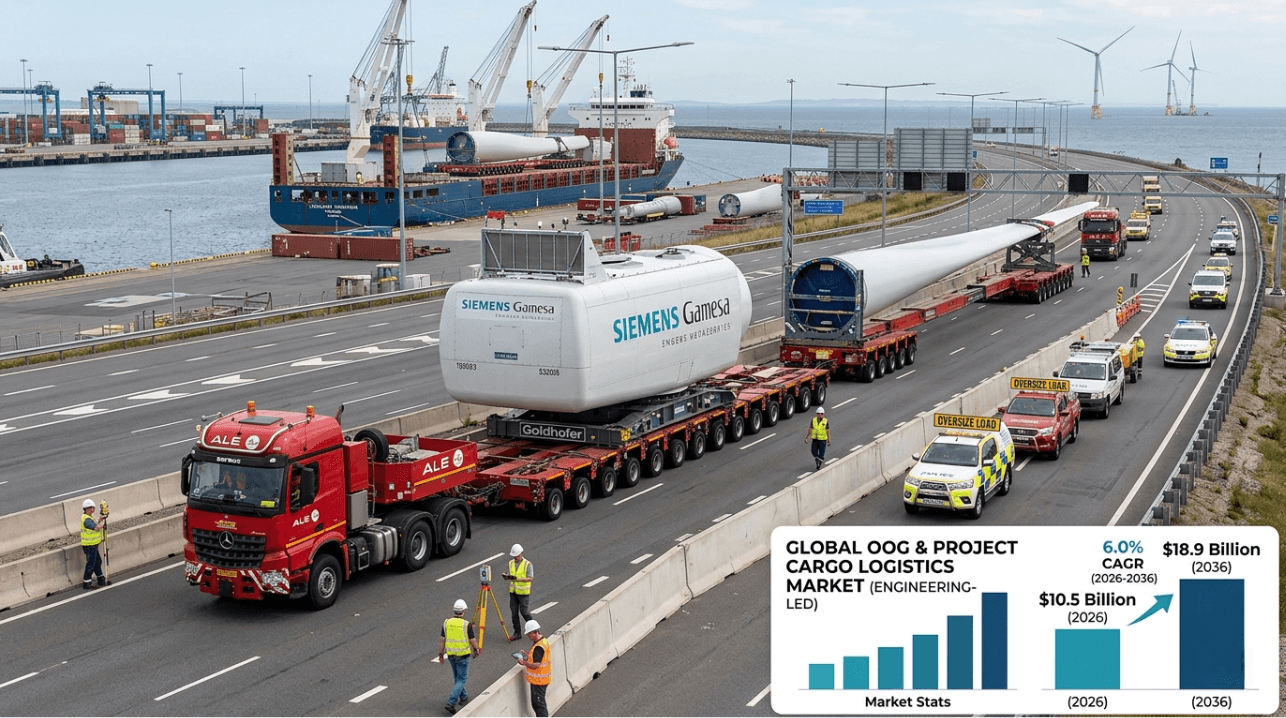
The global project cargo market is undergoing a significant transformation, with projections indicating it will reach $18.9 billion by 2036. This expansion is fundamentally altering the competitive landscape for heavy-lift operators, who now find that sophisticated engineering capabilities are no longer a differentiator but a mandatory requirement for securing contracts.
This trend is particularly driven by the surge in renewable energy projects, which frequently involve the transport of large, out-of-gauge (OOG) components such as wind turbine blades, nacelles, and offshore structures. The complexity and scale of these components necessitate meticulous planning, specialized equipment, and advanced technical expertise to ensure safe and efficient transport.
For freight forwarders and shippers, this evolution means that selecting a heavy-lift partner based solely on price or standard capacity is no longer sufficient. It is crucial to evaluate carriers and logistics providers on their engineering prowess, their ability to conduct detailed route surveys, manage complex lifting operations, and provide tailored solutions for oversized and project cargo. This emphasis on engineering directly impacts the feasibility and cost-effectiveness of moving challenging shipments, influencing project timelines and overall supply chain reliability. Forwarders should expect to see a greater focus on technical proposals and risk assessments in the tendering process for such projects.
Looking ahead, the market will likely see continued investment in specialized fleets, like SAL Heavy Lift's expansions, and a greater integration of engineering services into core heavy-lift offerings. Operators who fail to adapt to this engineering-centric approach risk losing out on significant opportunities within this rapidly expanding sector.