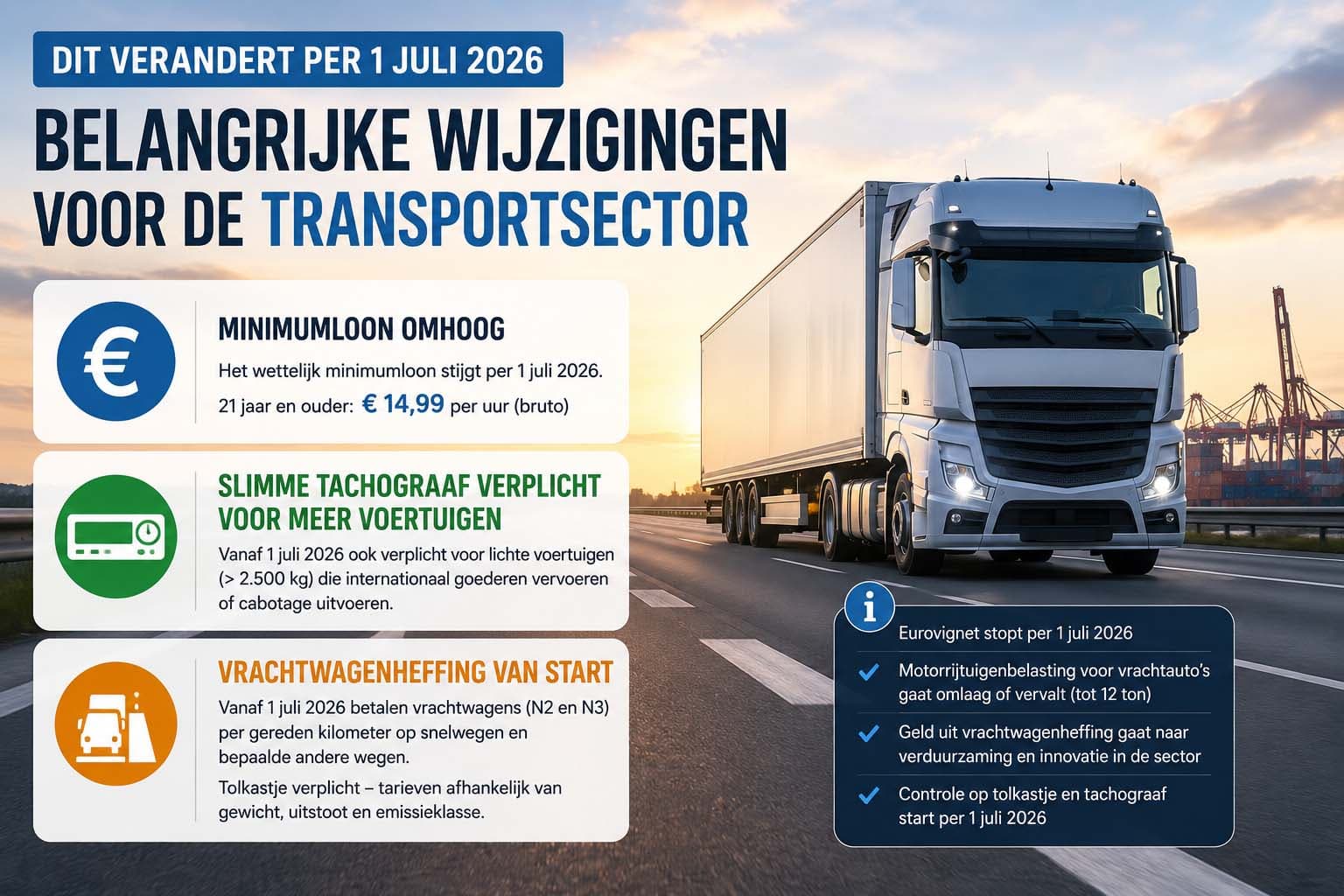
From July 1, 2026, the Dutch transport sector will face several new regulations and legislative amendments. These changes include a rise in the statutory minimum wage, which will directly affect operational costs for road hauliers. Additionally, the requirement for smart tachographs will be extended to a broader range of vehicles, necessitating compliance upgrades for many fleets.
Perhaps the most significant change is the introduction of a long-anticipated truck toll (vrachtwagenheffing). This new levy will add a direct cost to road freight movements within the Netherlands, impacting pricing strategies and potentially increasing overall logistics expenses. The specific details of the toll, such as its calculation and collection methods, will be crucial for transport operators to understand.
For freight forwarders and operations managers, these changes mean a need to re-evaluate budgeting and pricing. The increased minimum wage will likely lead to higher labour costs for drivers and other personnel. The expanded tachograph mandate requires investment in new equipment and ensuring driver compliance, potentially affecting scheduling and route planning. Most importantly, the new truck toll will be a direct pass-through cost, requiring adjustments to freight quotes and potentially influencing route optimization to minimize toll expenses. Forwarders should communicate these impending cost increases to their clients to manage expectations and avoid disputes.