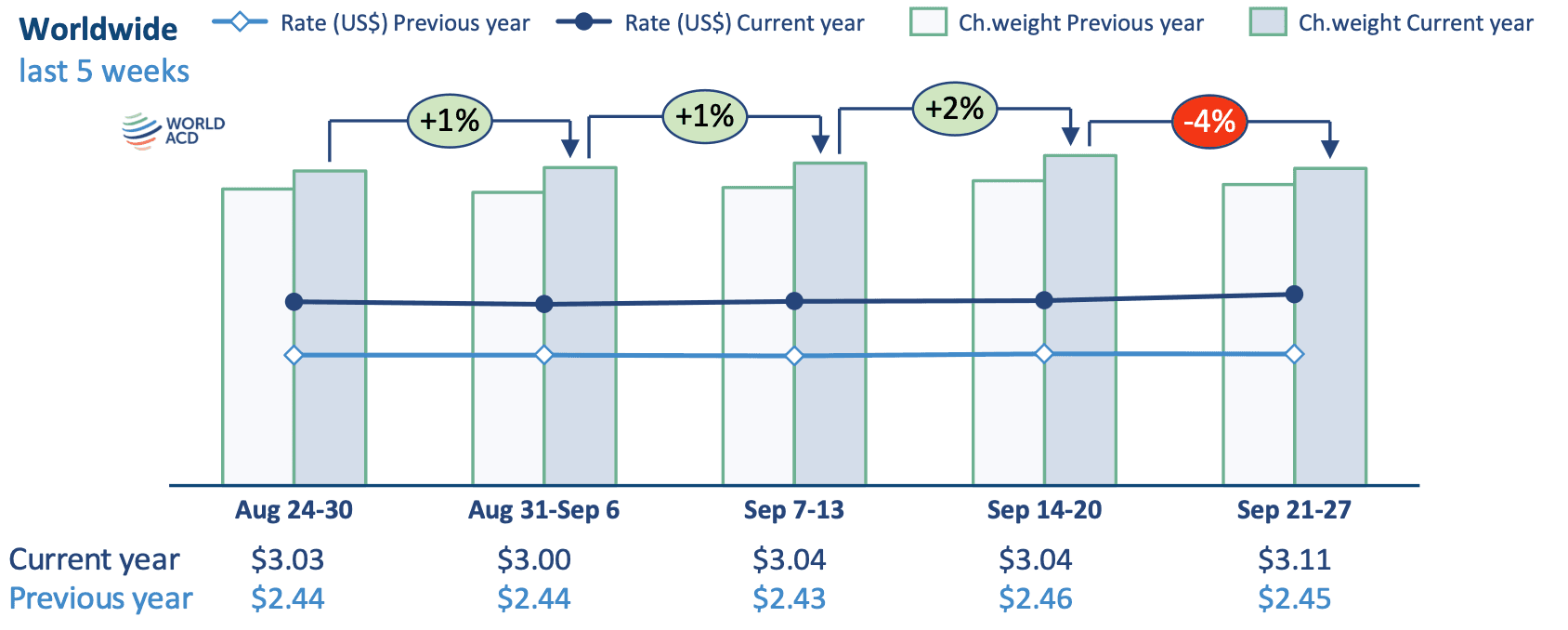
Global airfreight experienced a notable divergence in its market dynamics, with chargeable weight declining by 4% compared to the previous week. This reduction in tonnage was observed across nearly all sectors, indicating a widespread softening of demand. Conversely, airfreight pricing generally saw an increase across most trade lanes, with the exception of North America, where rates remained unchanged.
This situation suggests that despite a decrease in cargo volume, carriers are maintaining or even raising prices, possibly due to existing capacity management strategies or other cost pressures. For freight forwarders and operations managers, this trend implies that securing space might become easier, but cost savings from reduced demand may not materialize as expected. Shippers should anticipate stable to slightly higher airfreight costs even with lower volumes.
The week-on-week tonnage contraction was particularly evident for shipments originating from the Asia Pacific and Middle East regions, as well as South America. This broad-based decline in volume points to a potential slowdown in global trade or a shift in inventory strategies among shippers. The resilience of pricing despite falling demand could be attributed to factors such as fuel costs, labor expenses, or a strategic effort by carriers to preserve revenue in a less active market.