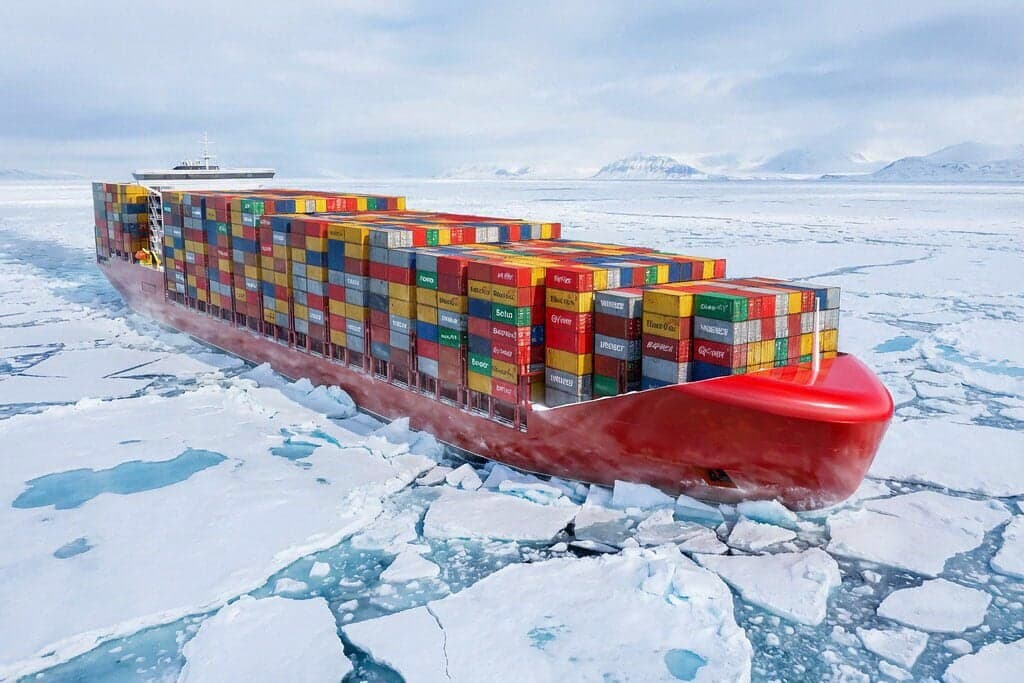
China's NewNew Shipping Line and Russia's state nuclear corporation, Rosatom, are moving forward with plans to construct five advanced ice-class container vessels. The primary objective of this collaboration is to enable continuous, year-round commercial shipping operations along the Northern Sea Route (NSR).
This development signifies a strategic push by both nations to leverage the Arctic as a viable and regular trade artery. Historically, the NSR has been challenging for commercial transit due to extreme ice conditions, limiting its use to seasonal windows or requiring heavy icebreaker support. The introduction of dedicated ice-class container ships is intended to overcome these limitations, making the route more predictable and efficient.
For freight forwarders and shippers, the successful implementation of year-round Arctic shipping could offer a significantly shorter transit alternative between Asia and Europe compared to traditional routes through the Suez Canal. This could lead to reduced lead times and potentially lower fuel costs, although these benefits would need to be weighed against higher operational costs for ice-class vessels and potential insurance premiums. Forwarders will need to monitor the reliability and capacity of this route as it develops, considering its impact on existing network designs and scheduling.
While the article does not specify a timeline for vessel delivery or route commencement, the acceleration of these plans suggests a commitment to making the NSR a more prominent feature in international logistics in the coming years.