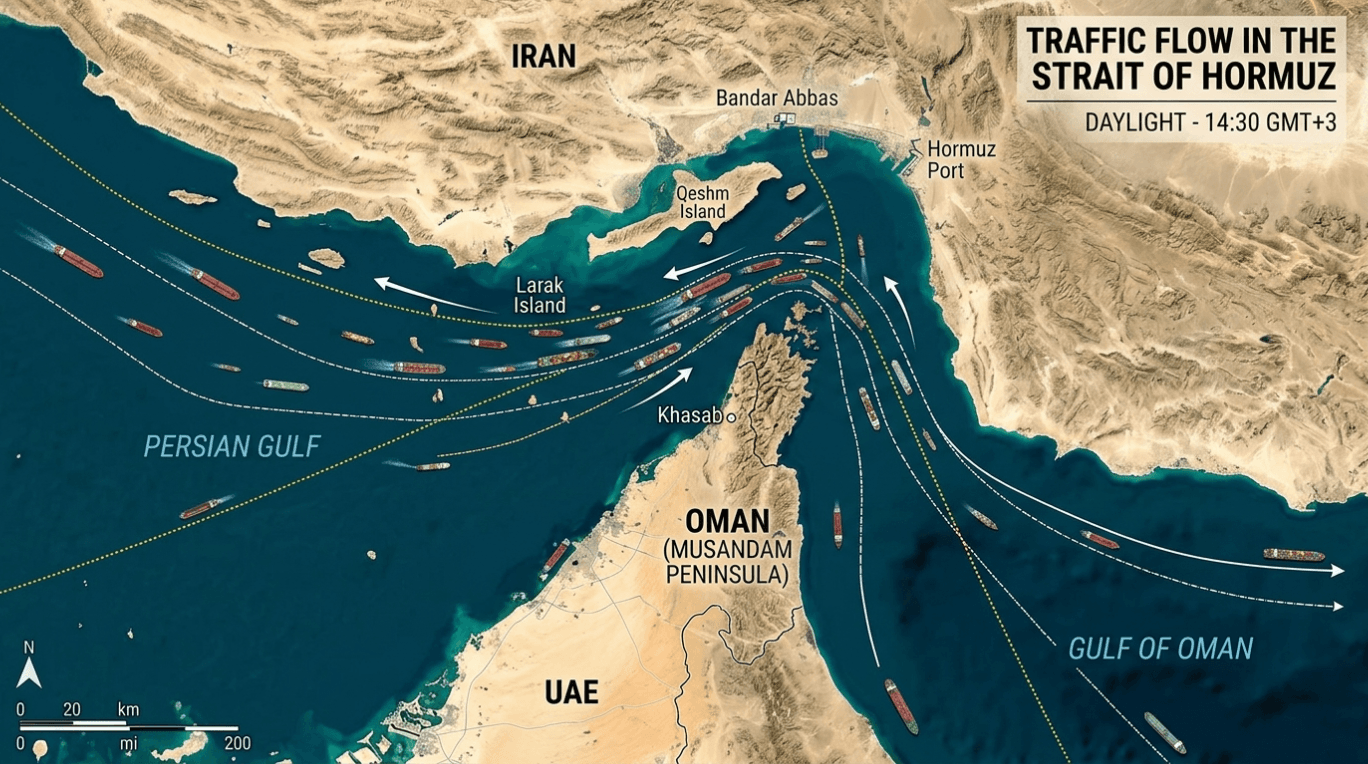
Commercial shipping activity in the Strait of Hormuz has experienced a severe decline, with traffic volumes dropping to just 17% of their usual levels. This significant reduction is a direct consequence of an intensifying security crisis in the region, which has seen vessels, including those operated by ADNOC, come under attack.
The ongoing instability forces maritime operators to navigate a complex and dangerous environment. They are now compelled to choose between two main routes: a northern corridor, which falls under Iranian control, or a southern route, where the majority of recent attacks have occurred.
For freight forwarders and operations managers, this situation presents critical challenges. The drastic reduction in traffic through the Strait of Hormuz will lead to severe disruptions in shipping schedules and potential delays for cargo transiting the region. Increased war risk premiums are highly probable, directly impacting freight costs. Forwarders must reassess routing strategies, potentially exploring alternative, longer, and more expensive routes, which could further strain capacity and lead to higher transit times. Shippers should anticipate significant cost increases and extended lead times for goods moving through or originating from the Gulf region.