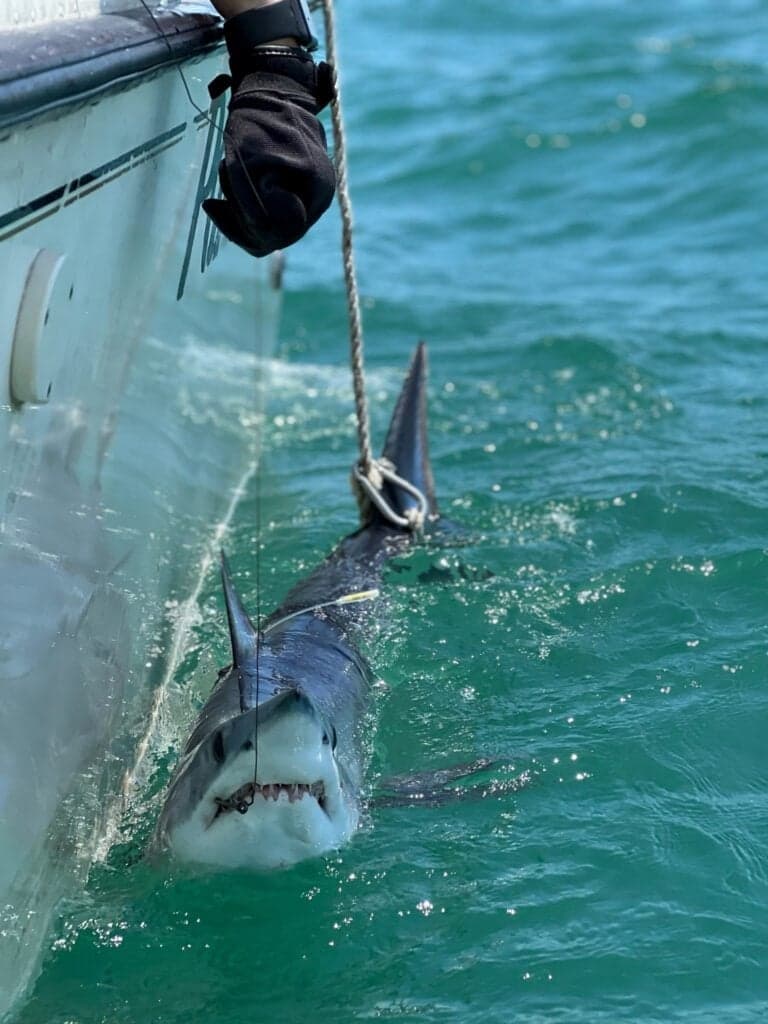
Scientists are deploying sharks fitted with advanced sensors to collect vital oceanographic data, a novel approach aimed at significantly improving hurricane prediction models. These bio-loggers record critical information such as ocean temperature and salinity levels, especially in deep-water regions that are difficult for conventional instruments to access. The data gathered by these marine animals provides a unique perspective on the conditions that influence hurricane formation and intensification, potentially leading to more accurate forecasts.
This initiative builds upon existing research that recognizes the importance of ocean conditions in hurricane development. Traditional methods, like buoys and underwater drones, have limitations in coverage and deployment, particularly in remote or rapidly changing environments. Sharks, as natural inhabitants of these areas, offer a continuous and dynamic data collection platform, moving through various depths and locations relevant to storm paths.
For freight forwarders and logistics professionals, more precise hurricane predictions are invaluable. Improved forecasts can lead to better planning for vessel rerouting, port closures, and cargo delays, minimizing disruptions to supply chains. Enhanced accuracy allows for earlier decision-making regarding shipment schedules and inventory management, potentially reducing costs associated with unexpected weather events and ensuring greater schedule reliability. This could mean fewer blank sailings or diversions, and better communication with shippers about potential impacts.
Future efforts will likely focus on expanding the network of sensor-equipped marine life and integrating this data more seamlessly into existing meteorological models. The success of this program could pave the way for similar bio-logging initiatives to monitor other critical environmental parameters relevant to maritime operations.