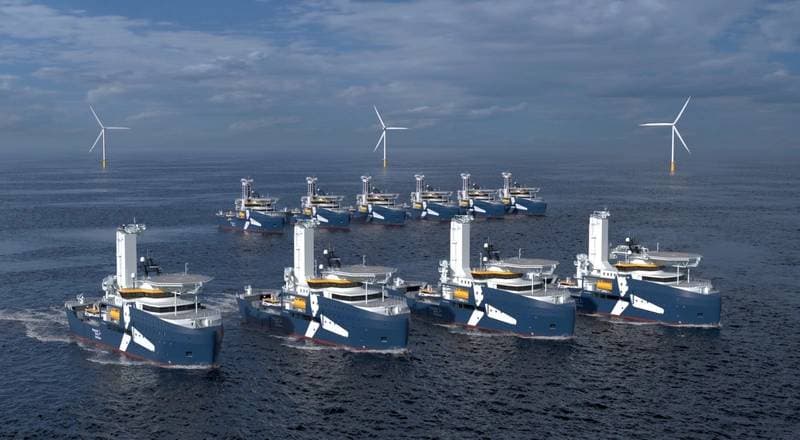
Vard has been awarded a contract by Trinity House, the British maritime safety and welfare organization, to deliver two new multi-function vessels. These ships are intended for the maintenance of buoys and lighthouses. A key feature of their design is the capability for future conversion to methanol fuel, aligning with evolving environmental standards.
In addition to being methanol-ready, the vessels will incorporate a hybrid propulsion system. This allows them to operate entirely on battery power when docked, further reducing emissions and fuel consumption during port calls. These newbuilds are slated to replace Trinity House's current aging fleet, specifically the THV Patricia and THV Galatea.
For freight forwarders and logistics operations, while not directly impacting cargo rates or capacity, this development highlights the ongoing trend towards decarbonization in the maritime sector. The adoption of methanol-ready and hybrid vessels by a prominent maritime authority like Trinity House signals a broader industry shift towards alternative fuels and sustainable technologies. This could influence future vessel specifications for support fleets and potentially lead to more widespread adoption of such technologies across various shipping segments, impacting bunker choices and operational costs in the long term.