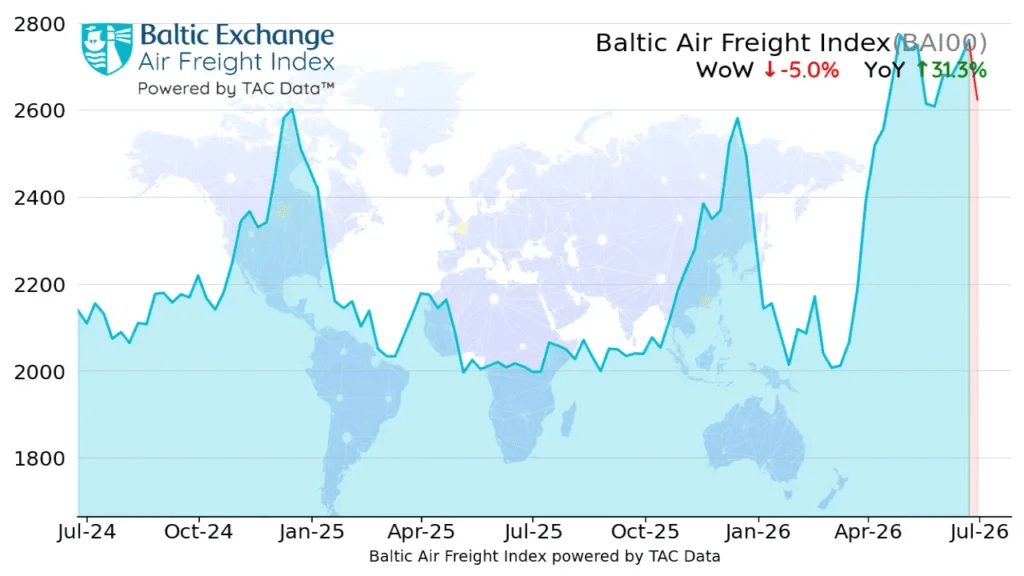
Despite a widely anticipated memorandum of understanding (MoU) between the United States and Iran, aimed at de-escalating the conflict in the Middle East, global air freight rates continued to climb throughout most of June. The Baltic Air Freight Index (BAI00), compiled by TAC Data, saw a notable increase of 5.8% over the four-week period ending June 22.
This sustained increase in air cargo costs suggests that while a ceasefire might alleviate some pressure on jet fuel prices, other market dynamics are currently driving rates. Factors such as persistent demand, limited capacity, or ongoing supply chain disruptions could be contributing to the upward trajectory, overriding the potential positive impact of reduced geopolitical risk.
For freight forwarders and operations managers, this indicates that the easing of Middle East tensions has not translated into immediate relief for air cargo pricing. Shippers should anticipate continued elevated air freight costs, and forwarders may need to explore alternative routing or capacity options to manage client budgets effectively. The market remains tight, requiring proactive planning and potentially longer booking lead times.
Further monitoring of the BAI00 and other air cargo indices will be necessary to determine if the ceasefire's long-term effects eventually lead to a stabilization or reduction in air freight rates.