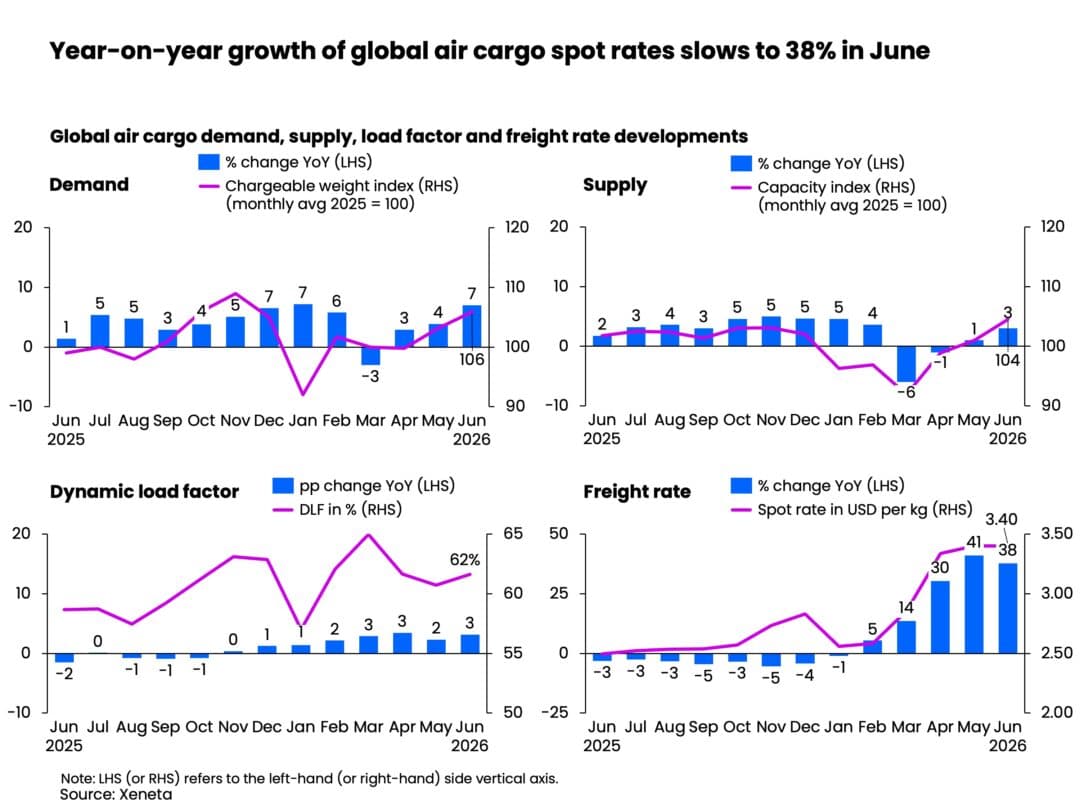
Global air cargo demand experienced a 7% year-on-year increase in June, according to data from Xeneta. This growth was largely attributed to robust shipments of semiconductors and hardware associated with artificial intelligence. The surge in AI-related cargo volumes is reportedly counteracting a decline in e-commerce airfreight traffic.
Despite the significant rise in demand, the rate at which spot prices increased has slowed. This moderation is linked to several factors, including an easing of disruptions in the Middle East region, the restoration of air cargo capacity at key Gulf hubs, and a decrease in jet fuel prices.
For freight forwarders and operations managers, this indicates a dynamic market where specialized cargo, like AI hardware, is a key driver of growth. While demand is strong, the easing of spot rate increases suggests a more stable pricing environment, potentially offering better negotiation opportunities for general cargo. The return of capacity in the Middle East also implies improved routing options and reduced transit times for shipments through that region, while lower fuel costs could translate to more competitive pricing from carriers.