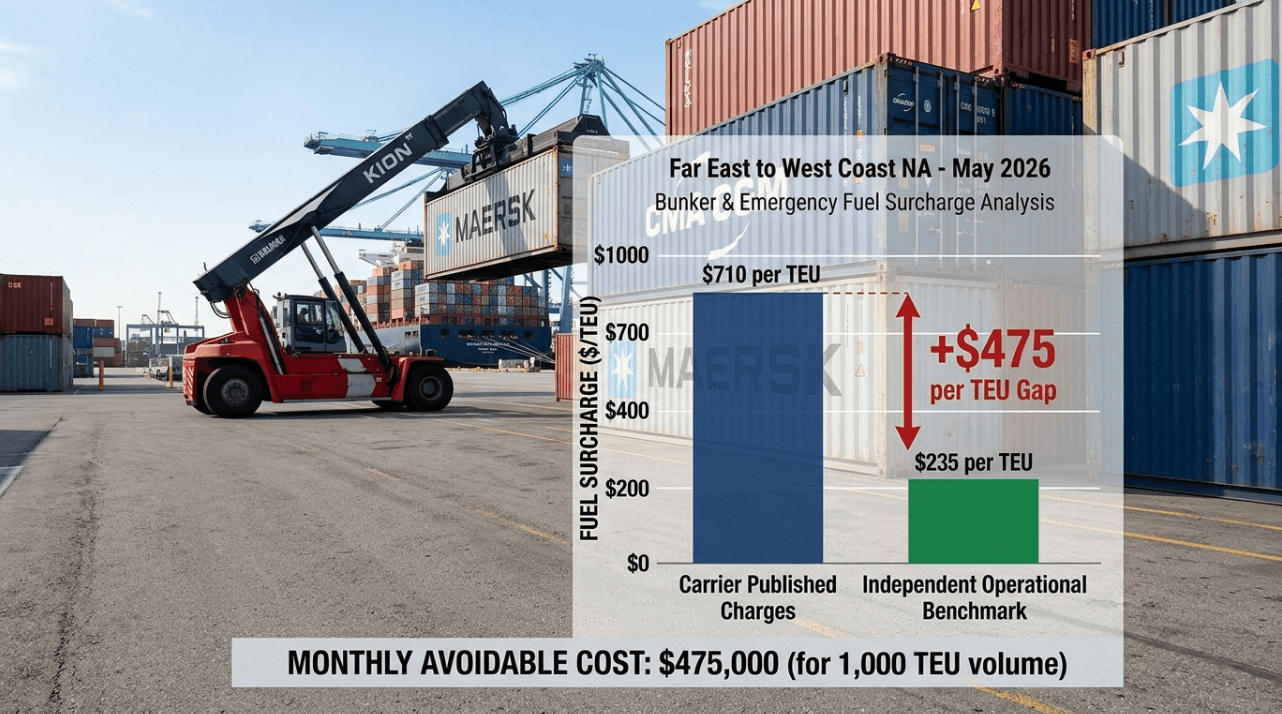
A considerable discrepancy of $475 per TEU has been identified between the fuel surcharges applied by ocean carriers and independent operational benchmarks. This gap is leading to renewed scrutiny regarding whether the Federal Maritime Commission's (FMC) current notice rules adequately safeguard shippers from potentially overpaying for Bunker Adjustment Factor (BAF) and Emergency Fuel Surcharge (EFS) charges.
As the third-quarter resets for these surcharges take effect, procurement teams within shipping companies are reportedly struggling to obtain the necessary data to effectively challenge the calculations provided by major carriers, specifically Maersk and CMA CGM, for the critical Far East to West Coast trade lane.
For freight forwarders and operations managers, this situation highlights a persistent challenge in managing unpredictable and often opaque fuel surcharges. The lack of transparency and data makes it difficult to verify the legitimacy of these charges, potentially impacting freight costs and budgeting. Forwarders may need to factor in this potential overcharge when quoting rates or advise shippers on the importance of scrutinizing BAF/EFS components. This could lead to increased negotiation efforts with carriers or a need for more robust internal analysis tools to benchmark fuel costs.