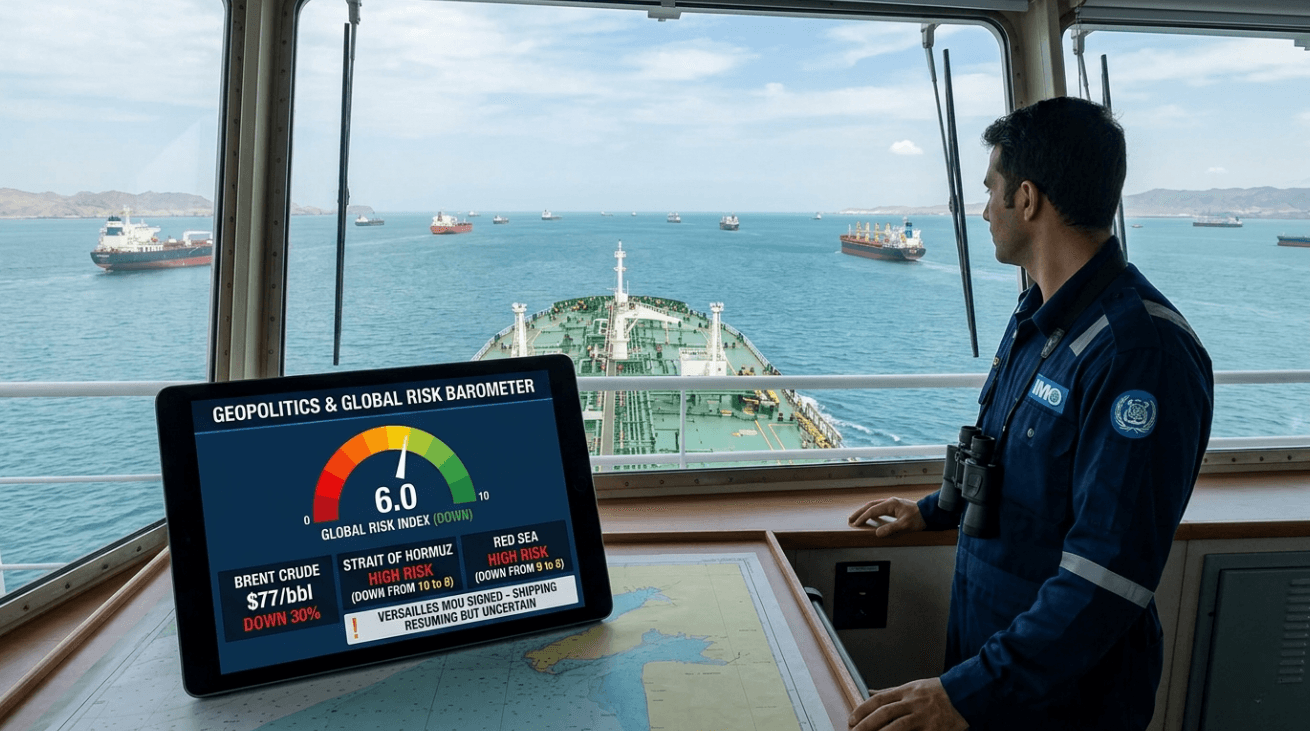
The recent Versailles Memorandum of Understanding (MOU) has initiated the most substantial shift in the maritime risk landscape since its inception. This agreement has directly contributed to a significant 30% reduction in Brent crude oil prices, bringing them down to $77 per barrel. Concurrently, the risk assessment for the Strait of Hormuz has been downgraded, indicating a perceived decrease in regional tensions. Following these developments, Iran reportedly shipped 30 million barrels of oil within a single week, suggesting increased market activity.
For freight forwarders and operations managers, this shift could lead to lower bunker fuel costs due to the drop in Brent crude prices, potentially impacting ocean freight rates. The downgraded risk in the Strait of Hormuz might also reduce war risk premiums for vessels transiting the area, offering some cost relief. However, the stability of this new risk map is uncertain, as threats of instability in Lebanon could unravel the positive effects of the Versailles MOU, particularly for breakbulk and project cargo operators who often face heightened risks and insurance costs in volatile regions.
Should the situation in Lebanon escalate, it could reintroduce volatility to the region, potentially reversing the current positive trends in oil prices and maritime security. This would necessitate a reassessment of routing, insurance, and operational costs for shipments, especially those involving oversized or heavy-lift cargo.