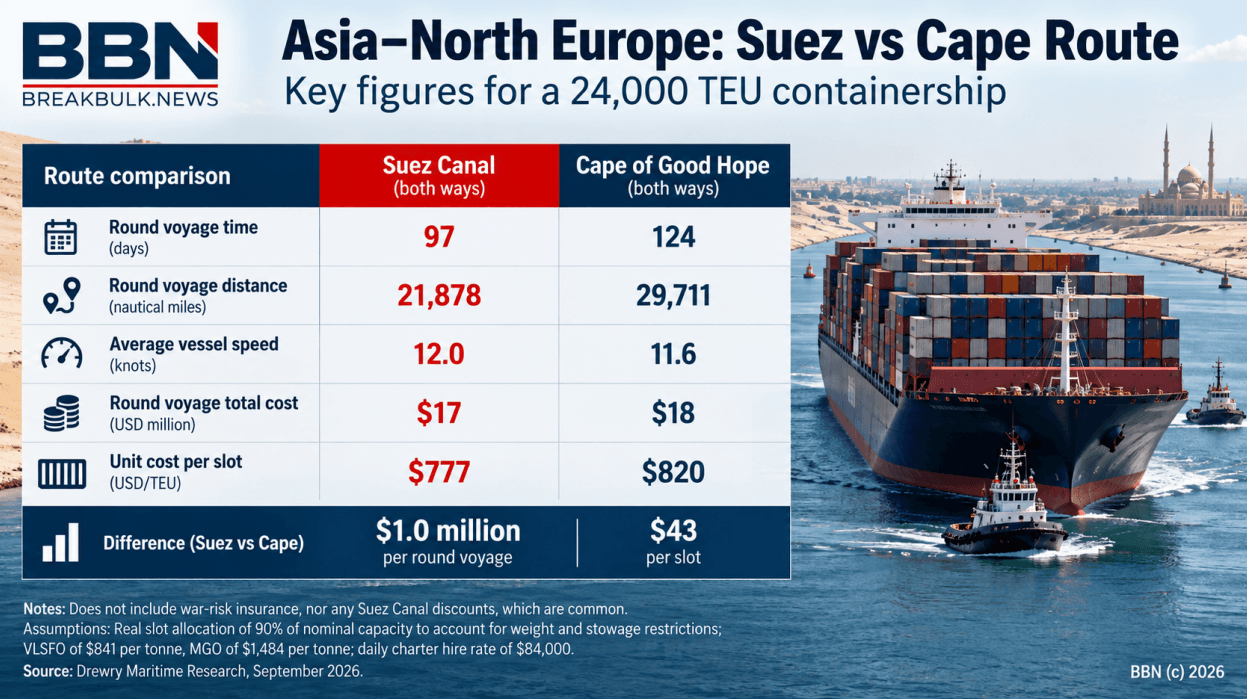
Container shipping lines are increasingly opting to transit the Suez Canal again, even though this decision exposes them to persistent security threats in the Red Sea. According to Drewry, carriers are making this choice primarily to achieve shorter transit times, which are crucial for network efficiency and schedule reliability, rather than for significant cost reductions. The analysis indicates that the per-slot saving for using the Suez route is minimal, approximately $43, suggesting that operational advantages are outweighing the financial incentives.
This shift comes as the container shipping market appears to be moving towards recovery, with carriers seeking to optimize their vessel deployment and maintain tighter schedules. The return to the Suez Canal reflects a strategic decision to enhance service speed and predictability, which can be a competitive advantage in a recovering market.
For freight forwarders and operations managers, this development means a potential for improved transit times on Asia-Europe routes. However, it also implies continued exposure to the geopolitical risks associated with the Red Sea and Gulf of Aden. Forwarders should remain vigilant regarding potential disruptions, such as Houthi attacks, which could lead to sudden rerouting, increased war risk premiums, and schedule delays. It is crucial to monitor carrier announcements closely and factor in the possibility of renewed diversions around the Cape of Good Hope, which would impact lead times and potentially freight rates.