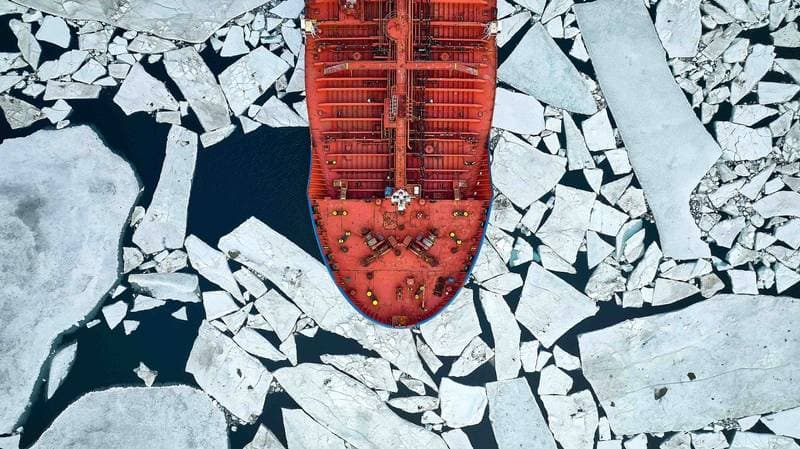
Russia is reportedly seeking to raise more than 200 billion roubles (approximately $2.35 billion USD) from its exporters. This capital is earmarked for the construction of a new fleet of icebreakers, essential for facilitating year-round navigation along the Northern Sea Route (NSR) in the Arctic.
This move underscores Russia's strategic focus on developing the Arctic as a key shipping corridor, offering a shorter transit time between Asia and Europe compared to traditional routes. The investment in icebreaker technology is crucial for maintaining and expanding access through the ice-laden waters of the Arctic.
For freight forwarders and shippers, an enhanced Arctic Sea Route could eventually offer an alternative to the Suez Canal, potentially reducing transit times and fuel costs, especially for cargo moving between Northeast Asia and Northern Europe. However, the route still faces challenges related to infrastructure, insurance, and geopolitical considerations. Increased icebreaker capacity could improve schedule reliability and open up new routing options for specific types of cargo, though widespread commercial viability remains a long-term prospect.