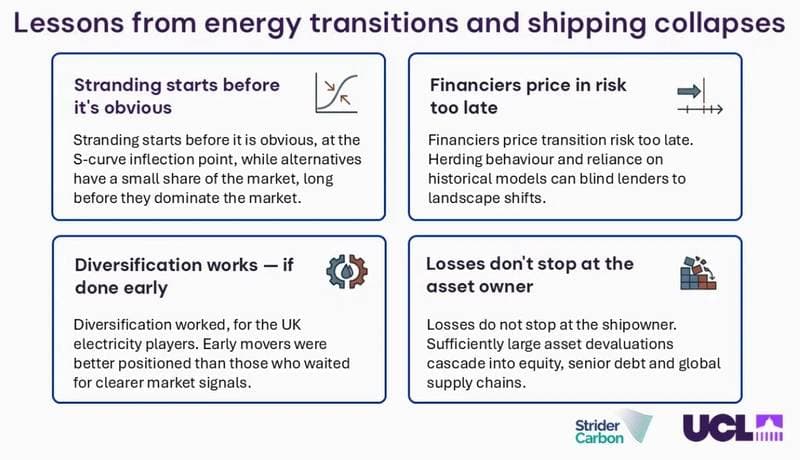
The maritime shipping sector's lenders and investors are at risk of making similar errors to those committed by European electricity utilities and their financiers a decade ago, potentially leading to stranded assets. This situation arises from significant investments in technologies or vessels that may not align with future decarbonization regulations and market demands, rendering them economically unviable before the end of their operational life.
This financial fallout could have far-reaching implications, extending beyond individual shipowners to impact banks, private equity firms, cargo owners, and other stakeholders across the global supply chain. The core issue is the rapid pace of regulatory changes and technological advancements aimed at reducing shipping's carbon footprint. If current investments do not adequately account for these shifts, assets like conventionally-fueled vessels could lose value significantly.
For freight forwarders and operations managers, this trend signals potential volatility in vessel availability and freight rates. Carriers facing stranded assets might struggle financially, leading to service disruptions, reduced capacity, or higher operational costs passed on to shippers. It also underscores the importance of partnering with carriers committed to sustainable, future-proof fleets to ensure long-term service reliability and avoid exposure to potential surcharges or limitations associated with non-compliant vessels. Forwarders should monitor carrier investment strategies and regulatory developments closely to advise clients effectively on potential impacts on their supply chains.
To mitigate these risks, the industry needs to prioritize investments in alternative fuels, energy-efficient vessel designs, and other sustainable technologies that are aligned with long-term decarbonization goals. This proactive approach will help prevent the creation of new stranded assets and foster a more resilient and environmentally responsible shipping industry.