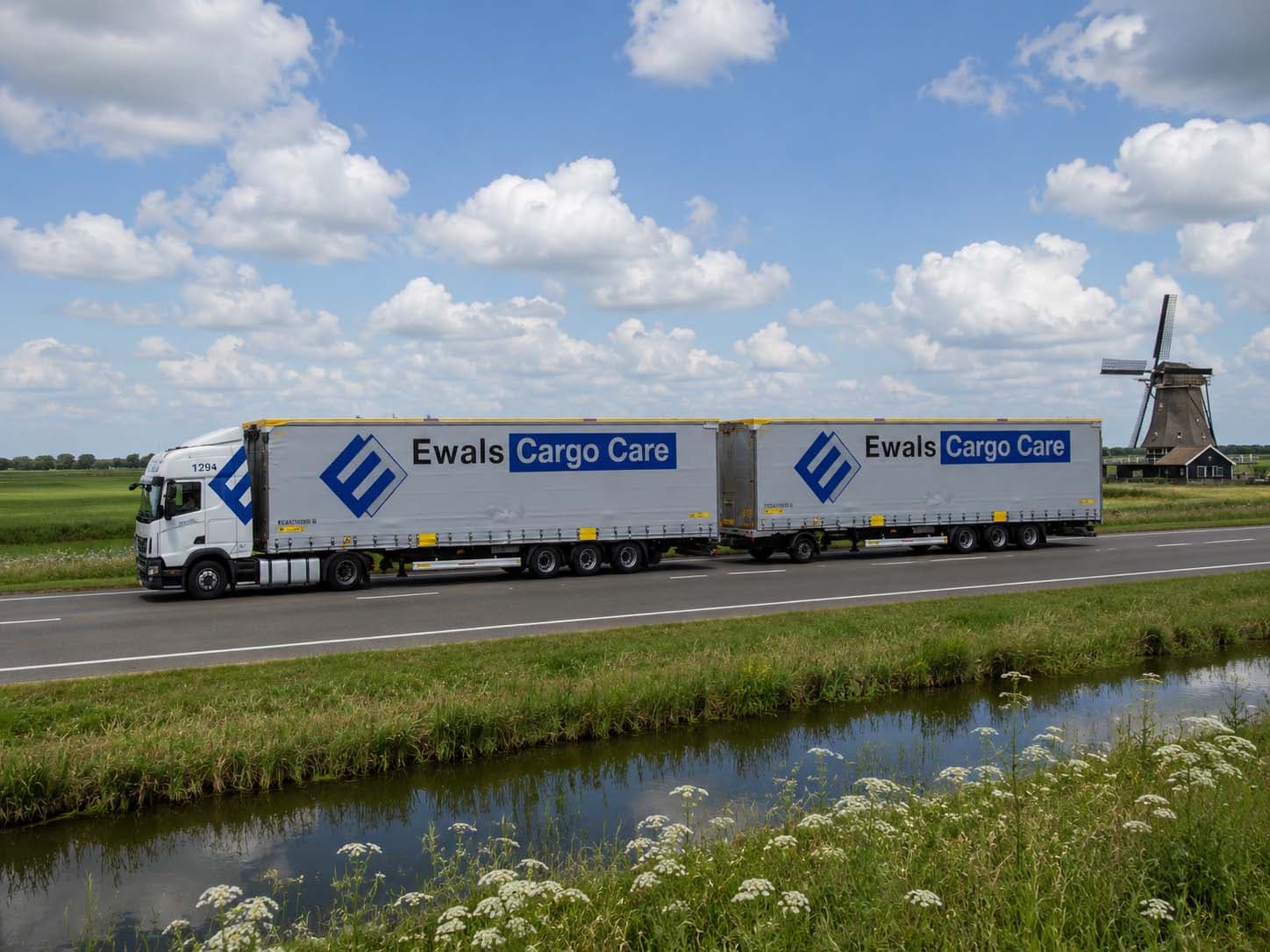
The Netherlands is moving forward with plans to introduce 64-ton Super-Ecocombi (SEC) trucks onto its public road network, with initial tests potentially commencing this autumn. Transport en Logistiek Nederland (TLN) announced that the RDW (Netherlands Vehicle Authority) is conducting the final control tests at its Lelystad facility. Upon successful completion of these tests, a pre-test phase on public roads will follow.
This development builds on previous legislative changes that allowed for longer and heavier vehicles (LHV), commonly known as ecocombis, to operate in the Netherlands. The Super-Ecocombi represents an evolution of this concept, designed to further optimize road transport efficiency and reduce environmental impact by carrying more cargo per journey.
For freight forwarders and logistics managers, the introduction of 64-ton SECs could significantly impact operational planning and cost structures. The increased payload capacity per vehicle means fewer trucks might be required for the same volume of goods, leading to potential reductions in fuel consumption, CO2 emissions, and overall transport expenses. This could be particularly beneficial for high-volume, low-density cargo or for consolidating shipments. However, route planning will become even more critical, as these larger vehicles may have restrictions on certain roads, bridges, or urban areas. Forwarders will need to stay informed about approved routes and any necessary permits to leverage this new transport option effectively.
If the public road tests are successful, the Netherlands could see these heavier and longer trucks integrated into regular freight operations, offering a new dimension to road logistics within the country.