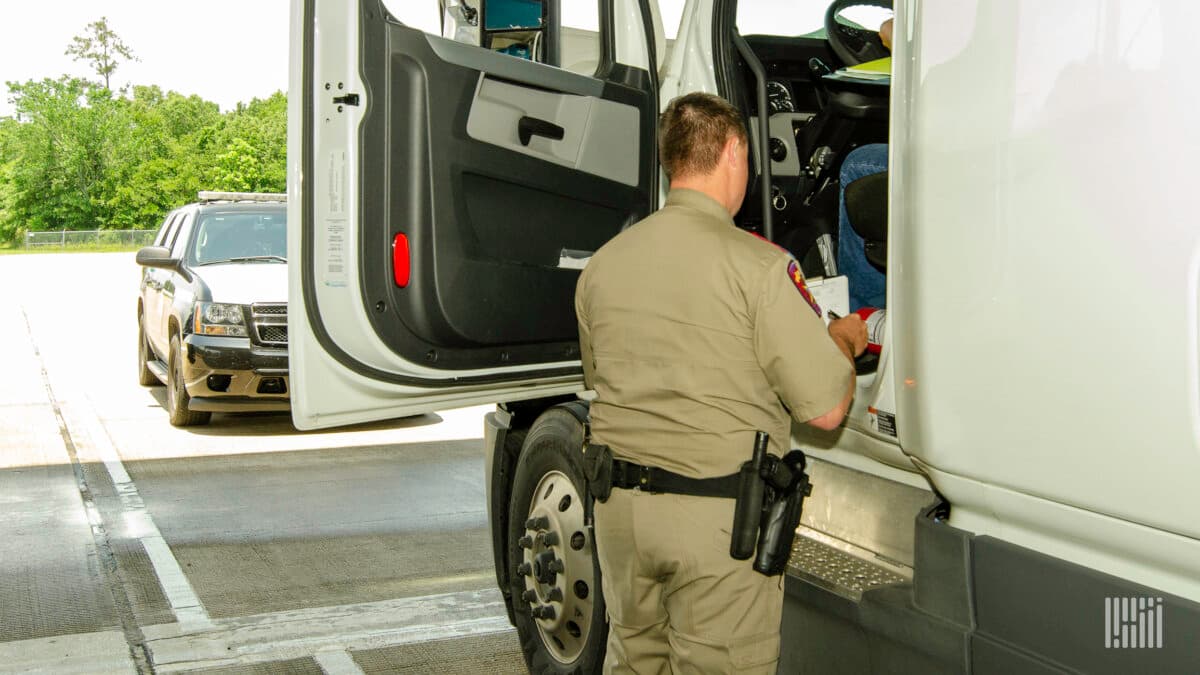
A truck driver recently encountered a new level of enforcement at an Arizona weigh station when an officer used license plate reader data to reconstruct his entire multi-state journey. This technological capability allowed the officer to identify discrepancies between the driver's paper logs and his actual movements, highlighting a significant shift in how trucking regulations are enforced.
This development signifies a new era where enforcement agencies are increasingly utilizing advanced surveillance technologies, such as roadside camera networks, to monitor commercial vehicle movements. These systems can track vehicles across different states, providing a comprehensive timeline of a truck's location and activity. The ability to cross-reference this data with driver logs allows for more accurate detection of hours-of-service (HOS) violations, which are critical for road safety.
For freight forwarders and operations managers, this means a heightened need for strict adherence to HOS regulations and accurate record-keeping. The increased scrutiny enabled by these camera networks could lead to more citations for non-compliance, impacting driver availability and potentially delaying shipments. It underscores the importance of robust digital logging systems (ELDs) and real-time tracking to ensure drivers are operating within legal limits and that their records accurately reflect their activities. Companies must ensure their drivers are fully aware of these enhanced enforcement methods and maintain impeccable logs to avoid penalties and operational disruptions.