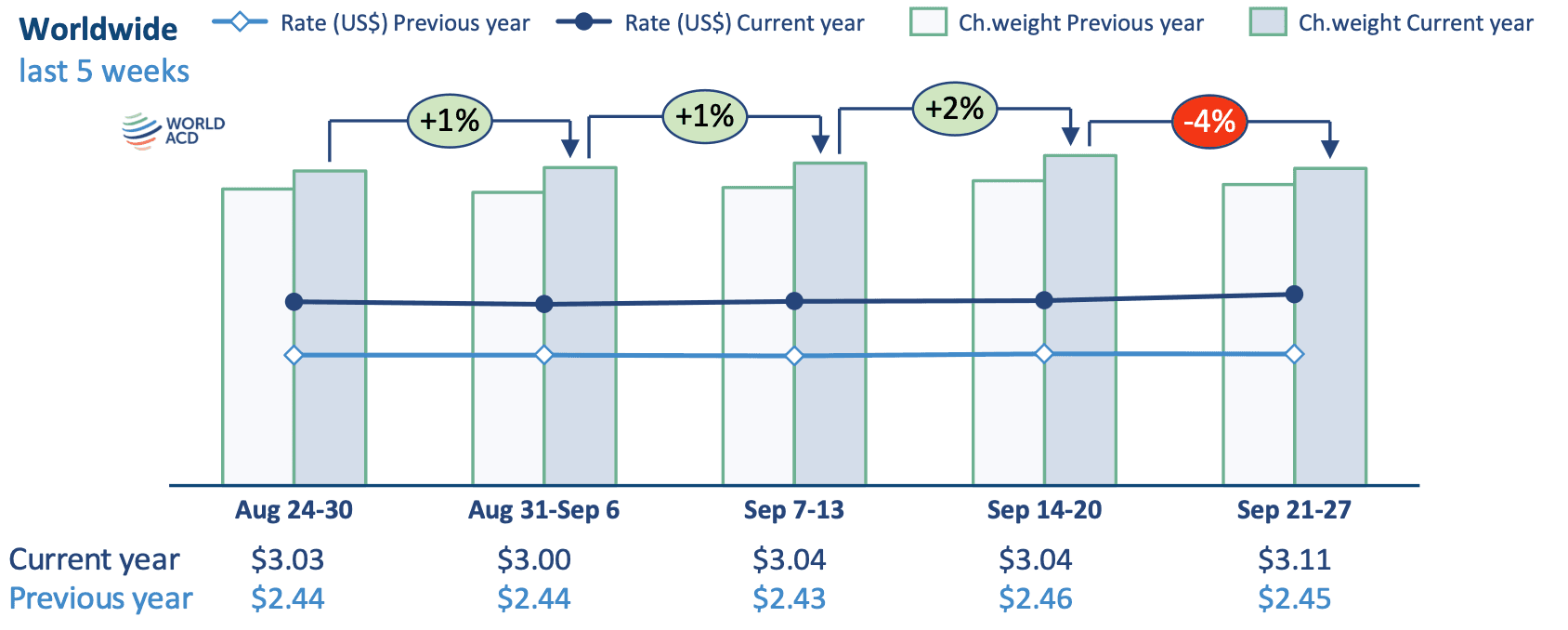
Global airfreight rates have started to ease, registering a 5% decrease last week, as reported by the Baltic Air Freight Index, which utilizes data from TAC Index. This downward trend is primarily linked to the recent ceasefire between the United States and Iran, which has subsequently led to a reduction in fuel costs. Despite this recent weekly decline, current airfreight prices are still 31.3% higher compared to the same period last year.
For freight forwarders and operations managers, this development suggests a potential softening of air cargo pricing, which could offer some relief on procurement costs for airfreight services. The direct correlation between geopolitical stability, fuel prices, and air cargo rates highlights the sensitivity of the market to external factors. While the immediate impact is a modest rate reduction, the overall year-on-year increase indicates that the market remains elevated. Forwarders should monitor these trends closely for further rate adjustments and capacity shifts, potentially allowing for more competitive pricing strategies or improved margins on air cargo shipments.