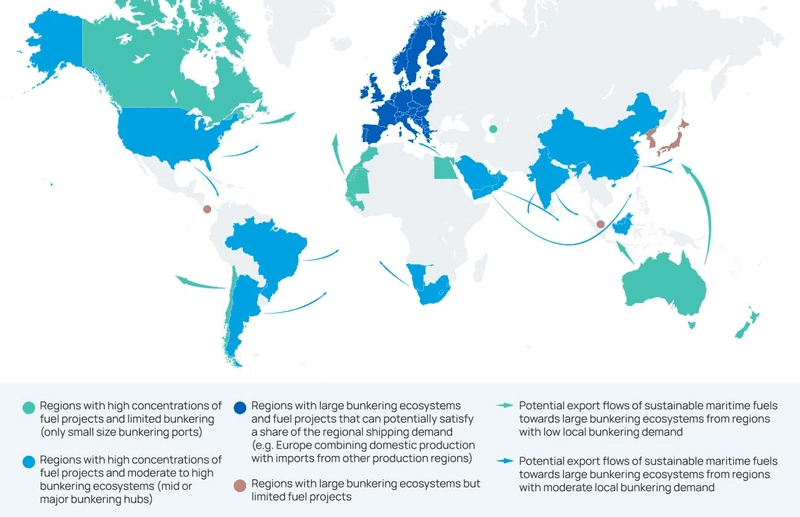
A recent report from the Lloyd’s Register Maritime Decarbonisation Hub indicates that focused, early investments in a select group of strategically located port hubs and export gateways could substantially expedite the widespread availability and uptake of sustainable maritime fuels. The study emphasizes that concentrating resources in these critical locations would create a more efficient pathway for the shipping industry's transition to greener energy sources.
This strategy aims to overcome initial infrastructure challenges and scale up production and distribution of alternative fuels like methanol, ammonia, and biofuels. By establishing these hubs, the maritime sector can more effectively meet its decarbonization targets.
For freight forwarders and operations managers, this development signals a potential future shift in bunkering locations and fuel procurement strategies. While immediate impacts on rates and capacity are unlikely, the long-term implications include more reliable access to sustainable fuels, which could influence vessel routing and carrier choices as environmental regulations tighten. Forwarders should monitor the development of these hubs as they will be crucial for compliant and sustainable shipping operations.
The report suggests that this concentrated investment model is a pragmatic approach to fostering the necessary infrastructure for a global green shipping transition, rather than a fragmented, widespread effort.