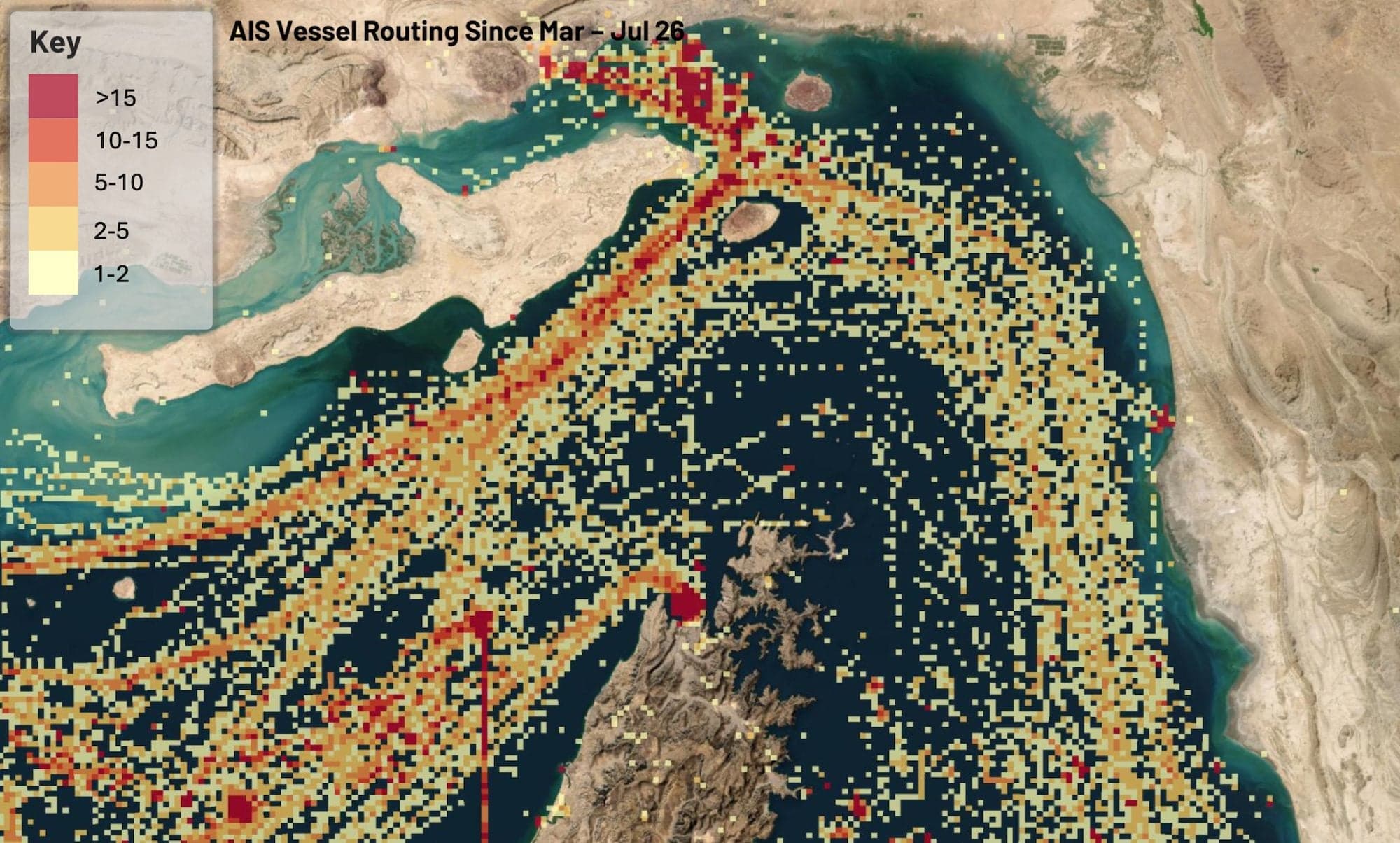
Transit data for September reveals that the oil and container shipping markets are making tactical adjustments to their routes in light of the ongoing geopolitical situation involving the U.S., Israel, and Iran. These changes suggest a concerted effort by carriers and shippers to navigate the complexities and potential disruptions associated with the Strait of Hormuz.
For freight forwarders and operations managers, this means increased scrutiny of routing options and potential for longer transit times or higher war risk premiums for shipments passing through or near the Strait of Hormuz. Shippers may experience altered schedules and potentially elevated costs as carriers prioritize security and operational continuity. It is crucial for forwarders to stay informed on the evolving geopolitical landscape and communicate any potential impacts on transit times or costs to their clients, especially for cargo originating from or destined for the Middle East or Asia-Europe trade lanes.