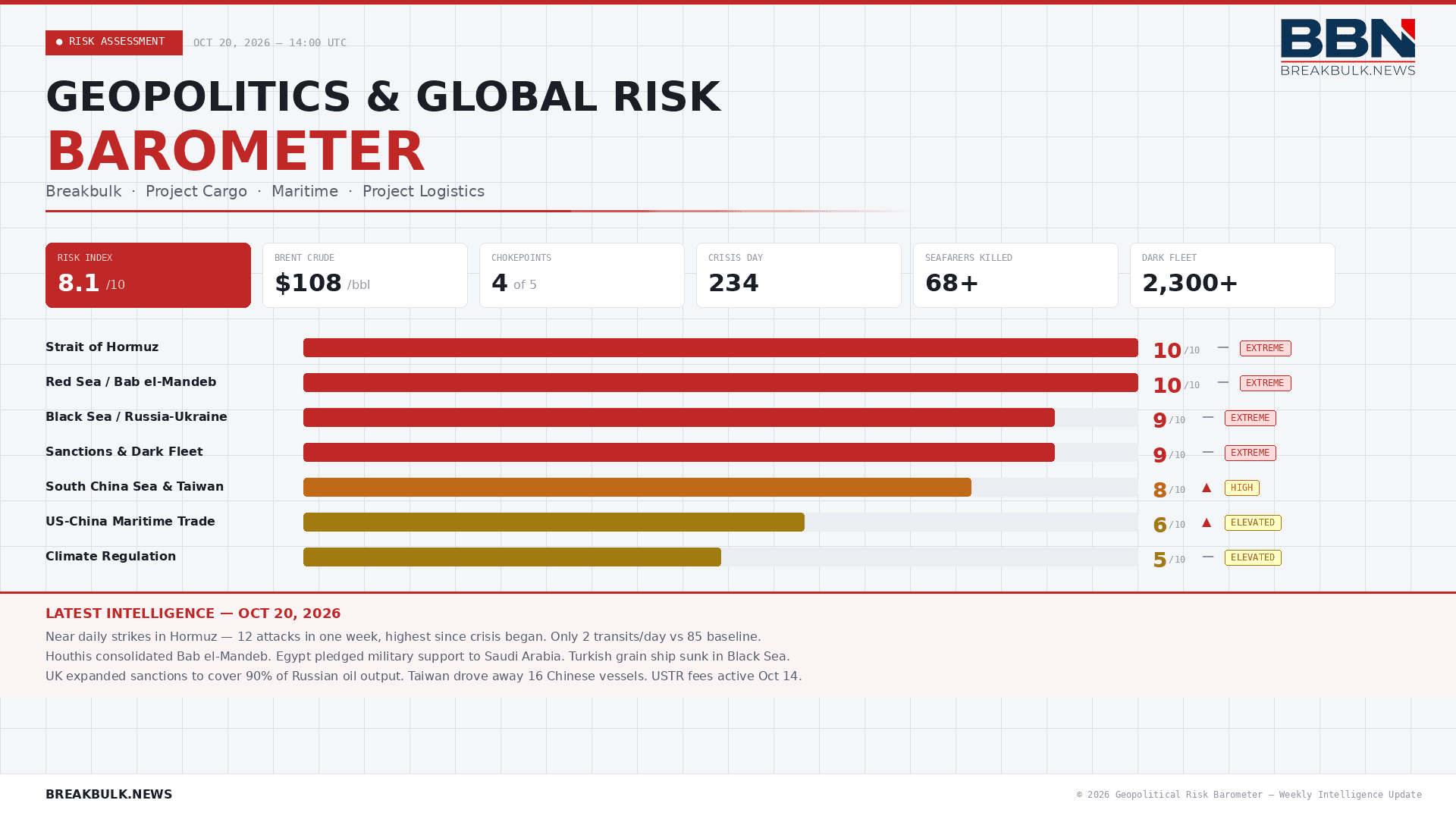
The latest Geopolitics and Global Risk Barometer has escalated to 8.1 out of 10, indicating severe and widespread disruptions across the global maritime landscape. This elevated risk level is primarily attributed to ongoing issues at four of the five major maritime chokepoints worldwide. Key factors contributing to this situation include a surge in attacks within the Strait of Hormuz, now averaging 12 incidents per week, and the expansion of sanctions targeting Russian oil, which now encompass approximately 90% of its output.
For freight forwarders and operations managers, this heightened risk environment translates into increased operational complexities and potential cost implications. Disruptions at critical chokepoints can lead to significant delays, necessitating rerouting of vessels and cargo, which in turn impacts transit times and schedule reliability. The increased frequency of attacks in the Strait of Hormuz will likely result in higher war risk premiums for vessels transiting the area, directly affecting shipping costs. Expanded sanctions on Russian oil could also create ripple effects across energy markets, potentially influencing bunker fuel prices and overall operational expenses for carriers. Forwarders should anticipate potential capacity constraints and be prepared for dynamic adjustments to shipping routes and pricing.