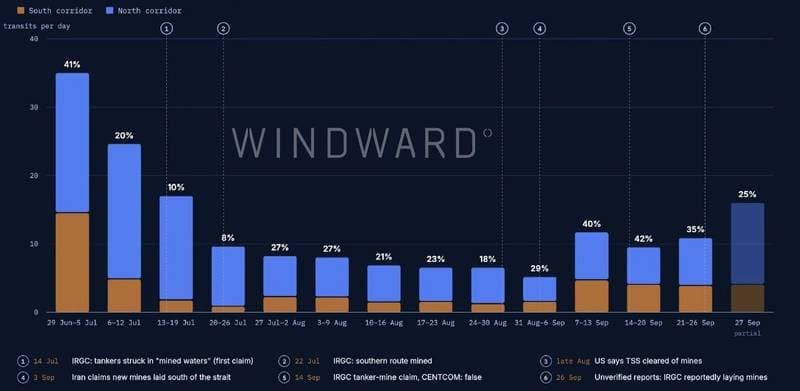
Crude oil exports transiting the Strait of Hormuz have effectively rebounded to their pre-conflict benchmarks. This recovery is largely attributed to the presence of U.S. military escorts, which have enhanced the security of shipments, alongside strategic pipeline diversions that have optimized crude flows. As of Monday, the seven-day average for crude oil passing through Hormuz reached 13.5 million barrels per day, aligning with the volumes observed before the Iran war.
Despite the resurgence in crude oil exports, the shipment of refined fuels from the region remains restricted. This disparity suggests ongoing challenges within the refined products supply chain or specific geopolitical pressures affecting fuel distribution, even as raw crude movements stabilize.
For freight forwarders and supply chain analysts, the stabilization of crude oil exports through the Strait of Hormuz signifies a reduction in immediate supply disruption risks for crude. This could lead to more predictable tanker schedules and potentially stable freight rates for crude oil carriers in the short term. However, the continued constraint on refined fuel shipments indicates that downstream logistics and pricing for finished petroleum products may still experience volatility or higher costs, impacting industries reliant on these fuels. Forwarders handling refined products should anticipate potential routing complexities or capacity limitations.
The article does not specify any future developments or changes.