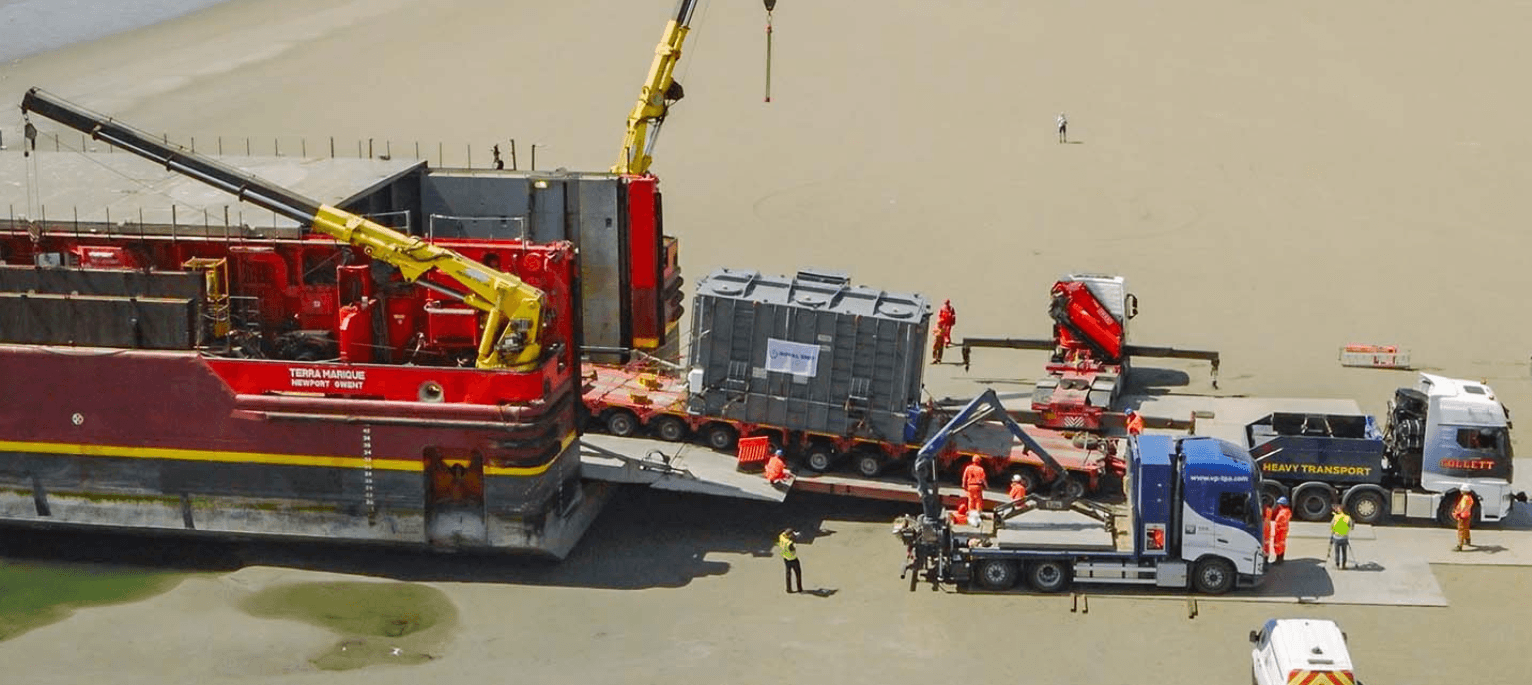
Collett recently executed a challenging project cargo delivery, transporting a 131-tonne shunt reactor to National Grid's Trawsfynydd Substation in North Wales. The operation commenced with the precise landing of the oversized equipment on Black Rock Sands beach, utilizing a critical 12-hour tidal window to offload the reactor directly from a vessel. This method was specifically chosen to circumvent the significant inland transport restrictions that would have otherwise complicated or prevented the movement of such a heavy and large component.
Following the beach landing, the reactor was then moved inland to its final destination. The installation at the Trawsfynydd Substation involved specialized hydraulic skidding techniques to position the reactor accurately. This multimodal approach highlights the intricate planning and specialized equipment required for heavy-lift and project cargo logistics.
For freight forwarders and logistics professionals, this case illustrates the innovative solutions often necessary for oversized and heavy-lift cargo. It underscores the importance of detailed route planning, considering alternative transport methods like sea-to-shore direct delivery to overcome infrastructure limitations. Such projects typically involve extensive coordination with port authorities, local councils, and specialized transport providers, impacting lead times and requiring flexible contingency planning. The successful execution demonstrates expertise in managing complex logistics chains for critical infrastructure components.