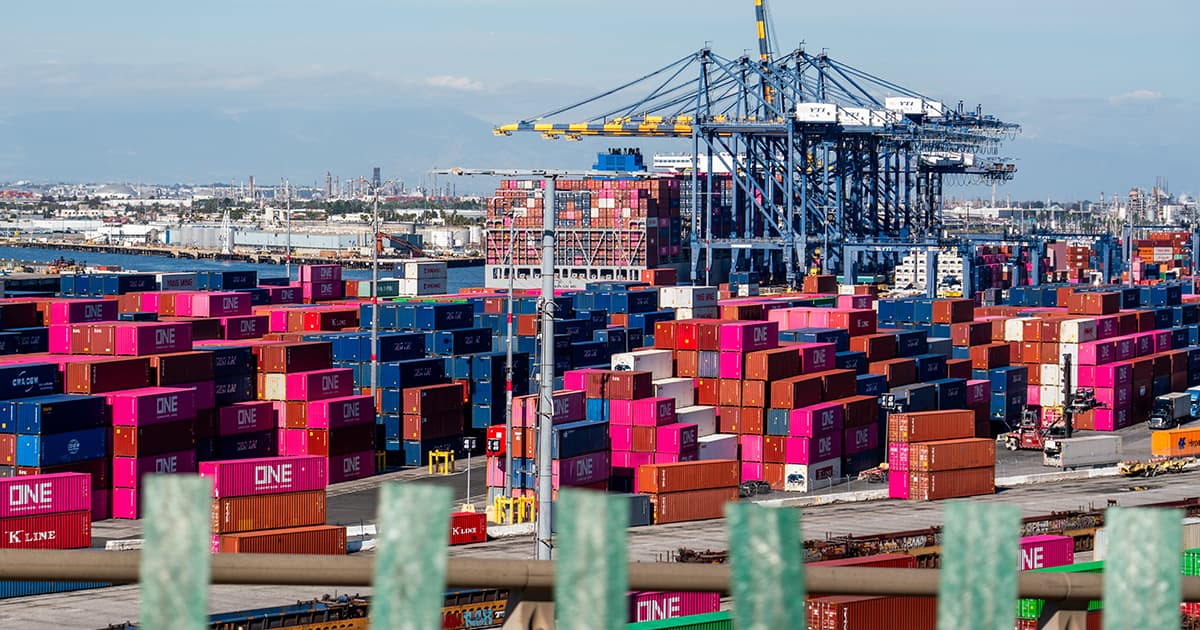
The Port of Los Angeles recently announced a new record for container throughput, processing more than 2.9 million twenty-foot equivalent units (TEUs) during the combined months of June, July, and August. This achievement marks the busiest three-month period in the port's operational history, underscoring robust activity at the United States' largest container gateway.
This surge in cargo volume indicates a strong and sustained demand for goods, particularly within the transpacific trade lane. The continuous high throughput suggests that the peak shipping season has either extended or intensified beyond typical patterns, challenging the port's infrastructure and operational capacity.
For freight forwarders and operations managers, this record volume at the Port of Los Angeles implies several key considerations. Firstly, while it demonstrates strong market demand, it also raises potential concerns regarding port congestion and vessel turnaround times, which could impact schedule reliability. Forwarders should monitor real-time port conditions and communicate proactively with drayage providers to mitigate delays. Secondly, sustained high volumes might put upward pressure on drayage rates and chassis availability in the Southern California region. Planning for potential equipment shortages and securing capacity in advance will be crucial for maintaining efficient supply chains. This strong performance also suggests that demand for transpacific services remains high, potentially influencing ocean freight rates on this critical trade lane.
The port's ability to manage such high volumes efficiently will be a key factor in maintaining supply chain fluidity in the coming months, especially as the industry approaches the traditional holiday shipping season.