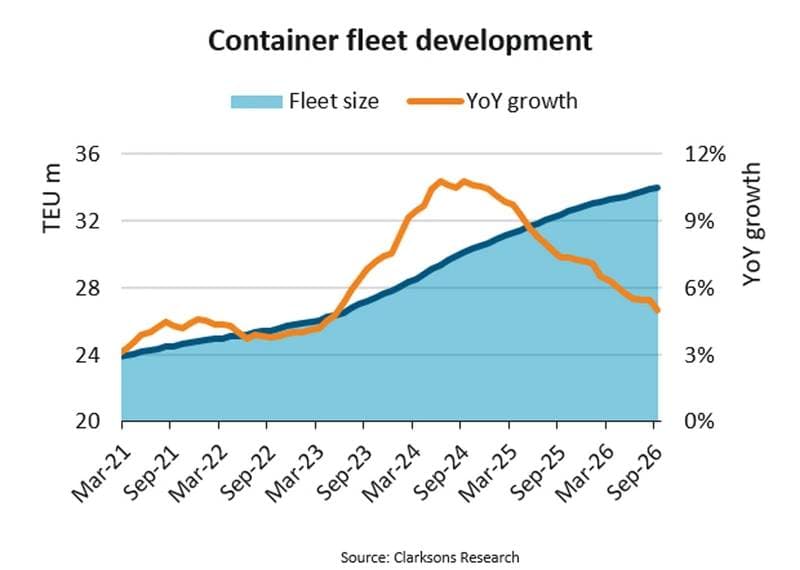
The global container ship fleet is rapidly approaching a total capacity of 34 million TEU. This milestone represents a remarkable 42% increase in capacity over a period of just five and a half years, according to analysis by Niels Rasmussen.
This expansion is a direct result of ongoing deliveries from shipyards, fulfilling a substantial orderbook. The continuous influx of new, often larger, vessels is significantly boosting the overall carrying capacity available in the market.
For freight forwarders and operations managers, this surge in capacity could lead to increased competition among carriers, potentially softening freight rates on certain trade lanes. While more vessel space generally improves schedule reliability and offers greater flexibility in booking, it also means carriers will be under pressure to fill these ships, which might influence pricing strategies and service offerings. Shippers may benefit from more options and potentially lower costs, but forwarders will need to monitor market dynamics closely to leverage these changes effectively.