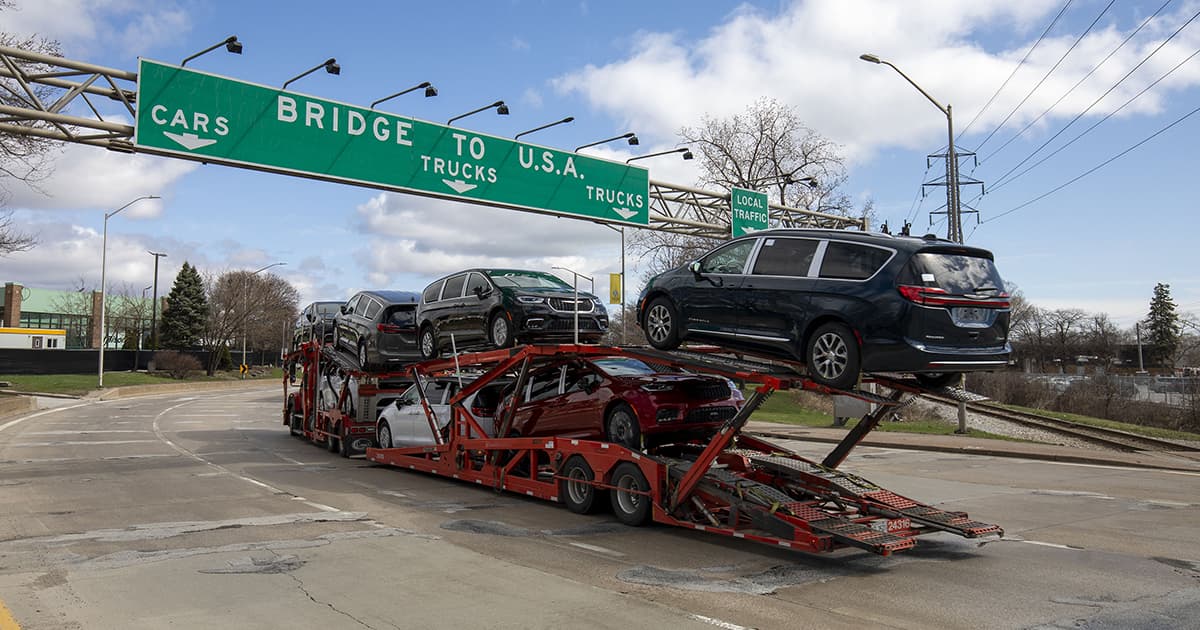
Former President Donald Trump has announced his intention to implement a 100% tariff on automobiles imported from Canada, should he be elected for a second term. This declaration follows a recent breakdown in trade negotiations between the U.S. and Canada, which resulted in a 50% tariff being applied to billions of dollars worth of Canadian products. The proposed increase specifically targets the automotive industry, a critical sector for both economies.
For freight forwarders and logistics professionals, such a tariff escalation would likely lead to significant disruptions in the automotive supply chain. The immediate impact could include increased shipping costs for vehicles and components moving between the U.S. and Canada, potentially forcing manufacturers to re-evaluate their production and distribution networks. This could also lead to delays as companies adjust to new import duties and compliance requirements. Forwarders might see a shift in routing or an increased demand for customs brokerage services as clients navigate the complexities of higher tariffs.