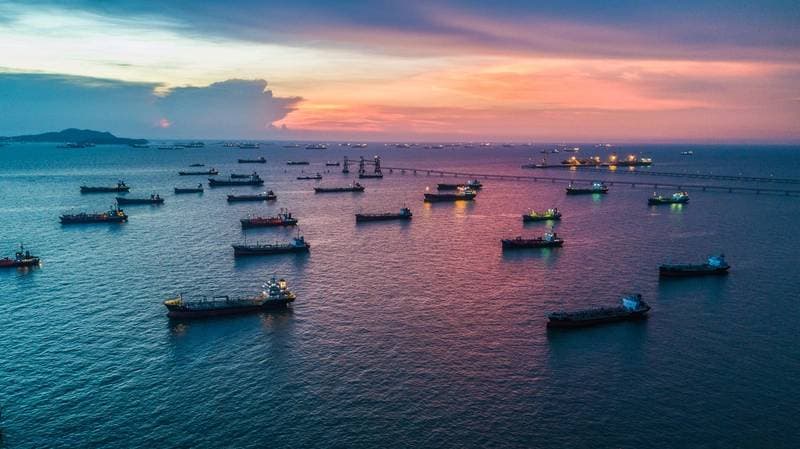
A fleet of ten vessels with connections to Japan has successfully navigated out of the Strait of Hormuz. These ships had been held within the Gulf for an extended period, reportedly due to heightened regional tensions. Among the departing vessels was a supertanker carrying crude oil from Saudi Arabia destined for South Korea, as indicated by shipping data.
This development follows a period of significant disruption in the region, where maritime traffic has faced increased scrutiny and security concerns. The Strait of Hormuz is a critical chokepoint for global oil shipments, and any prolonged disruption impacts international energy markets and supply chains.
For freight forwarders and shippers, the departure of these vessels signifies a potential de-escalation of immediate maritime risks in the Strait of Hormuz. This could lead to more predictable vessel schedules and a reduction in the elevated war risk premiums that have been applied to shipments transiting this volatile area. Ops managers should monitor for sustained stability, as consistent passage could alleviate some planning complexities and cost burdens associated with Middle East trade lanes.
While the source does not specify future actions, the successful transit of these vessels may encourage other operators to resume normal operations, provided the security situation remains stable.