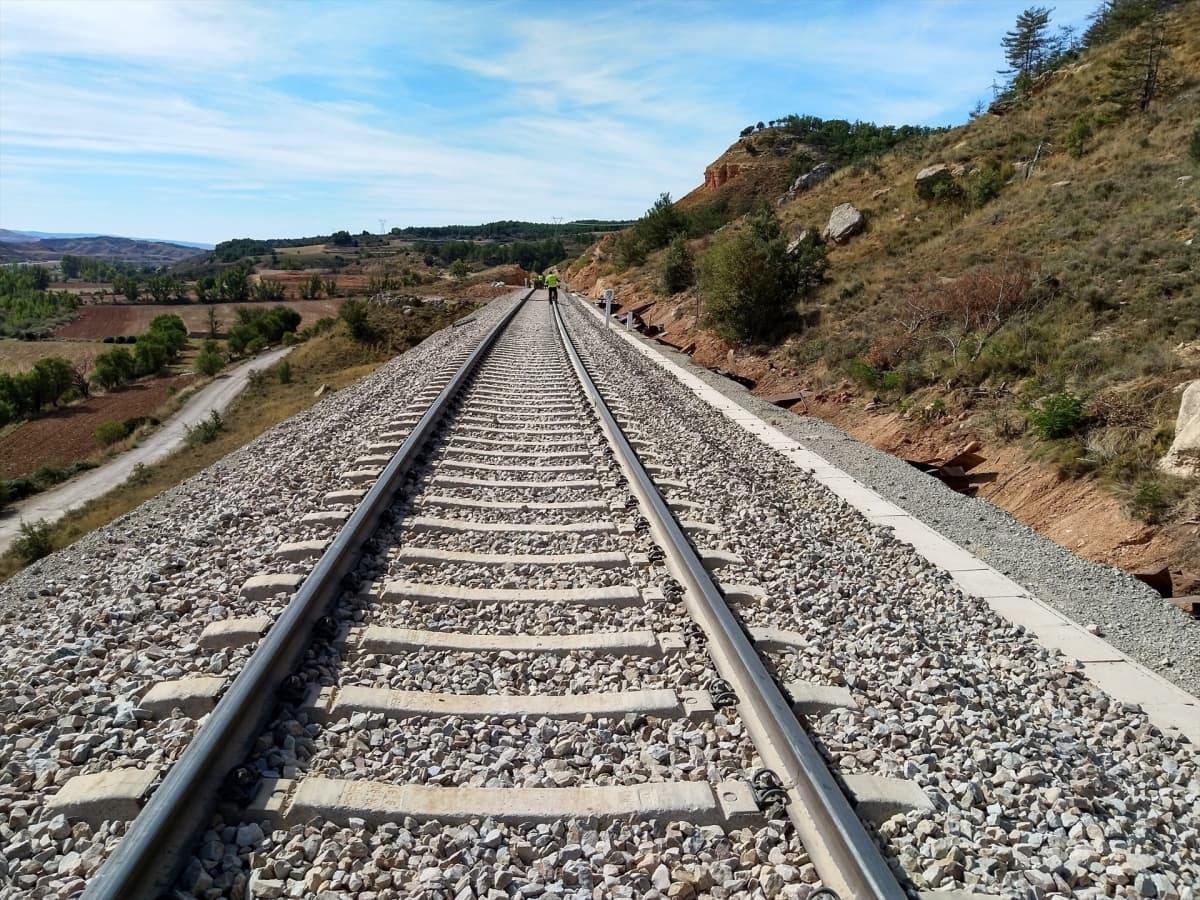
Spain's Ministry of Transport has made a controversial decision to proceed with a single-track, electrified upgrade for the Teruel–Sagunto segment of the Cantabrian–Mediterranean Corridor. This choice bypasses an earlier proposal for a double-track system, drawing sharp criticism from various regional governments and industry groups. Opponents argue that a single track will inherently constrain the line's operational capacity, hindering its ability to support anticipated freight volumes and economic development.
The Cantabrian–Mediterranean Corridor is a vital infrastructure project intended to enhance rail connectivity between Spain's northern and eastern regions, facilitating both passenger and freight transport. The Teruel–Sagunto section is particularly crucial as it connects the inland region of Aragon with the port of Valencia, a key maritime gateway. The debate centers on whether the chosen single-track solution can adequately serve the long-term strategic and economic objectives of this corridor.
For freight forwarders and shippers, this decision could translate into future capacity bottlenecks and potentially higher costs on this route. A single track inherently limits the number of trains that can operate simultaneously, leading to potential delays, reduced frequency, and less flexibility for scheduling. This might force some cargo to rely on less efficient or more expensive alternative transport modes, impacting supply chain efficiency for goods moving between Aragon and the Mediterranean coast via Valencia. The lack of double-track infrastructure could also deter future investment in rail-dependent industries along the corridor.
While the source does not explicitly state next steps, the strong opposition suggests continued lobbying efforts from regional governments and industry associations to reconsider the decision or advocate for future upgrades. The long-term implications for freight movement through this corridor will depend on how effectively the single-track system can manage demand and whether future political will emerges to expand capacity.