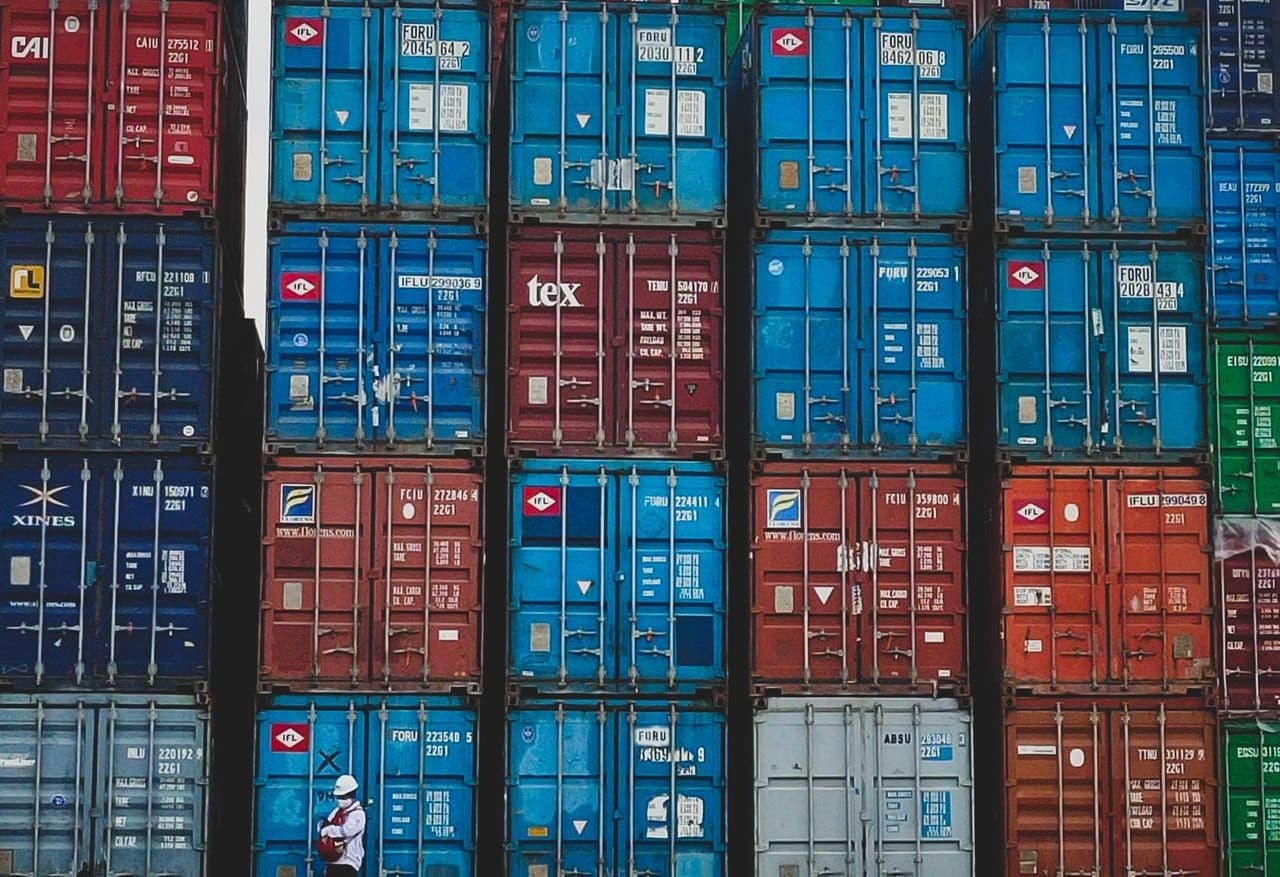
The closure of the Strait of Hormuz is now significantly disrupting container shipping by causing a severe shortage of empty containers. This issue extends beyond initial concerns about vessel delays and war risk premiums, directly affecting the operational ability of carriers to reposition equipment. When loaded vessels are unable to depart the Gulf region on schedule, the flow of empty containers back to major manufacturing centers in Asia is interrupted. This creates a practical problem for booking desks at key Asian export ports like Shanghai and Ningbo, where cargo may be ready but no containers are available.
Major carriers are responding to this disruption. Maersk has informed customers that empty containers for imports into the UAE, Qatar, Saudi Arabia (Dammam, Jubail), Bahrain, Kuwait, Iraq, and parts of Oman will no longer be accepted at standard return points. Instead, returns are being redirected to specific depots in Salalah and Sohar in Oman, and Jeddah in Saudi Arabia. This change often incurs additional drop-off charges, some reaching four figures, highlighting the carriers' need to control equipment in a volatile region with uncertain vessel movements and limited port options. For importers, this means extra inland costs, planning time, and paperwork to move containers to designated return locations.
Hapag-Lloyd has also taken measures, suspending export shipments where empty containers have not yet been picked up and advising customers to retrieve already gated-in export boxes due to loading suspensions. This illustrates how container shortages manifest not only from missing boxes but also from equipment being stranded in the wrong locations. A container stuck in the Gulf cannot serve an exporter in China, and a vessel awaiting transit west of Hormuz cannot reposition equipment to Asia, breaking the interconnected global container network.
Sea-Intelligence estimated in March that the Hormuz closure could trap approximately 204,000 TEU of deep-sea container capacity within the Persian Gulf, excluding local feeder vessels. While some Qatar-controlled LNG tankers have maintained limited transits, container lines continue to treat the waterway as a high-risk corridor, leading to stranded ships and alternative routing. This distinction is crucial for cargo owners, as limited tanker movement does not signify a recovery in the container network, which relies on reliable loops, berth windows, and efficient equipment repositioning. The early impact of these equipment shortages is primarily felt in Asia, where exporters are experiencing difficulties during peak periods as vessels avoid the Gulf, await clearance, or reroute cargo. This situation echoes previous supply chain disruptions, presenting logistics managers with the familiar challenge of "cargo ready, no container." For freight forwarders and ops managers, this means anticipating longer lead times for equipment, potential surcharges for container repositioning, and the need to explore alternative routing or even modes for urgent shipments. The disruption could also lead to increased demand for breakbulk or project cargo services if containerized options become too constrained or costly.