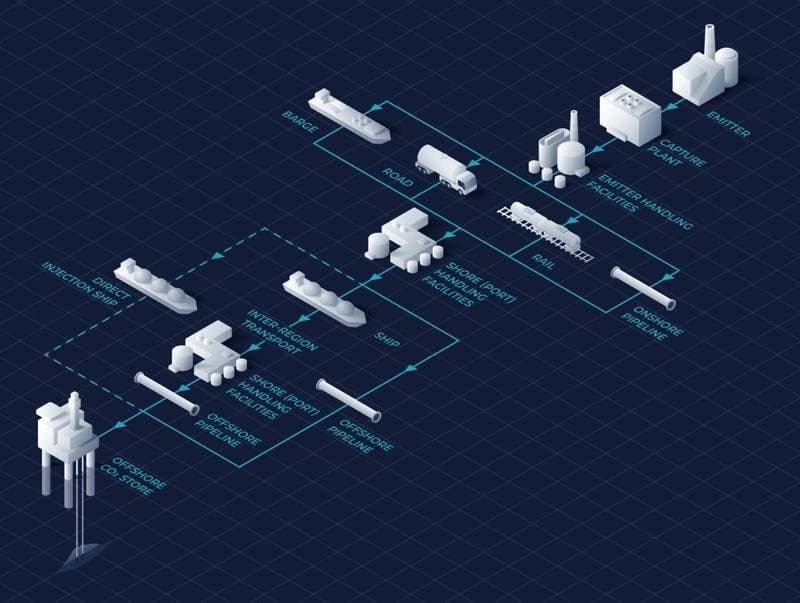
A recent study led by energy consultancy Xodus projects that Europe will need a substantial maritime infrastructure by 2050 to support the anticipated growth of Carbon Capture, Utilization, and Storage (CCUS). This includes a dedicated fleet of around 65 CO2 transport vessels and a network of 33 strategically located ports capable of handling CO2 shipments.
This development is critical for European nations aiming to achieve their decarbonization targets, as CCUS is considered a vital technology for reducing industrial emissions. The study, titled "CCUS Enabling Infrastructure Study," highlights the significant investment and planning required to establish the necessary logistics chain for capturing, transporting, and storing CO2.
For freight forwarders and logistics operators, this signals a nascent but potentially significant new market segment. While direct rate impacts are not immediate, the long-term implications include opportunities in specialized vessel chartering, port logistics for CO2 handling, and potentially new multimodal transport solutions for connecting industrial emitters to port infrastructure. Forwarders should monitor the development of these specialized ports and vessel types, as they represent a future growth area in green logistics. Understanding the regulatory frameworks and safety protocols for CO2 transport will also become increasingly important.
The report emphasizes that without this dedicated shipping and port infrastructure, the ambitious CCUS deployment targets across Europe may not be achievable, underscoring the urgency for planning and investment in this specialized maritime sector.