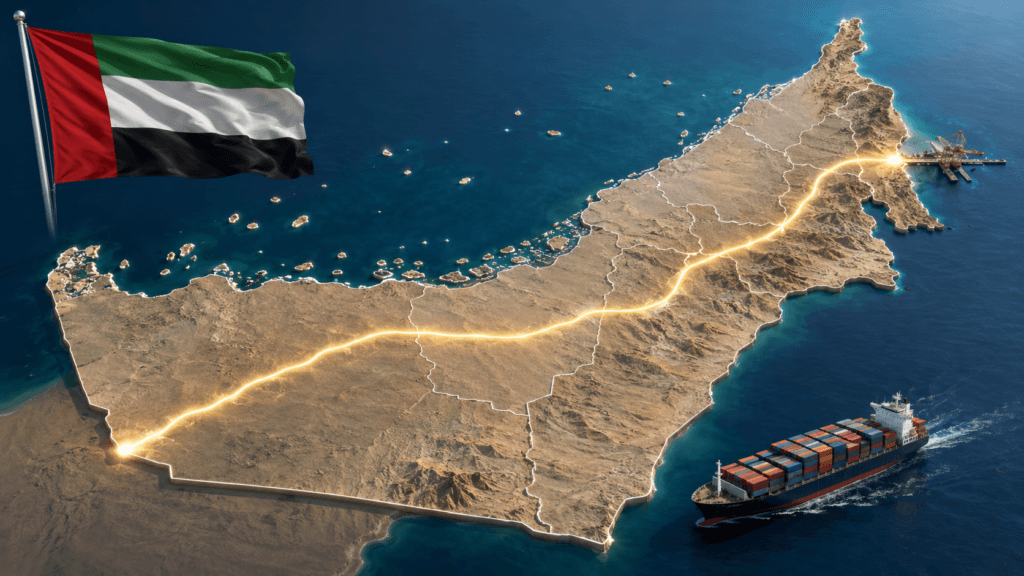
The United Arab Emirates is actively developing and validating a new logistics corridor designed to bypass the Strait of Hormuz. This strategic shift is influenced by three primary factors: the increasing viability of alternative routes, Iran's targeted maritime actions, and the UAE's need to diversify its port operations.
Historically, the Strait of Hormuz has been a critical chokepoint for global oil and gas shipments, and increasingly, container traffic. Recent geopolitical developments, particularly those involving Iran and regional security concerns, have underscored the vulnerability of this narrow passage. The UAE's proactive measure seeks to mitigate these risks by offering a more secure and reliable alternative for cargo movement.
For freight forwarders and shippers, this bypass architecture presents a significant opportunity to enhance supply chain resilience. It could offer a more predictable transit route, potentially reducing war risk premiums and avoiding potential disruptions associated with the Strait of Hormuz. While initial implementation may involve adjustments to existing routing and logistics networks, the long-term benefits could include improved schedule reliability and reduced exposure to geopolitical volatility in a critical maritime region. This development is likely to influence carrier routing decisions and could lead to new service offerings leveraging the UAE's alternative infrastructure.
The article implies that this bypass is already in development and being validated, suggesting that its impact on regional maritime geography is unfolding in real time. Further details on specific routes, infrastructure investments, and operational timelines would provide more clarity for logistics planning.