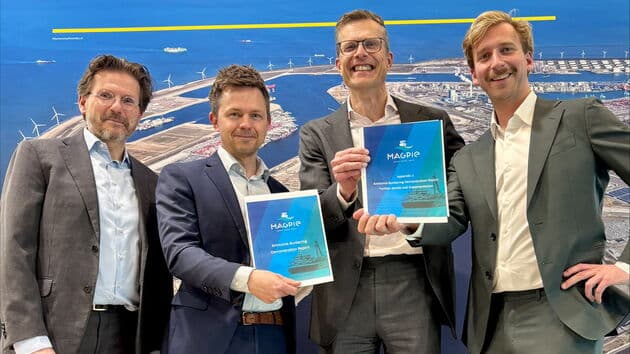
The Port of Rotterdam recently published results from a comprehensive, full-scale demonstration of ammonia bunkering, which took place on April 12, 2025. This exercise, conducted under the European Union's MAGPIE project, aimed to assess the feasibility and safety of ship-to-ship ammonia refueling within a busy port setting. The findings indicate that such operations can be performed safely, contingent on the implementation of robust safety procedures, the use of specialized equipment, and the establishment of suitable regulatory frameworks.
This development is significant as the maritime industry explores alternative fuels to meet decarbonization targets. Ammonia is considered a promising zero-emission fuel, but its handling requires careful consideration due to its toxic properties. The successful demonstration in Rotterdam marks a crucial step towards integrating ammonia into the maritime fuel mix.
For freight forwarders and logistics professionals, the validation of safe ammonia bunkering at a major hub like Rotterdam signals progress in the adoption of green fuels. While direct rate impacts are not immediate, the long-term implications include potentially higher bunker costs for ammonia-fueled vessels, which could translate to increased freight rates. However, it also offers a pathway for shippers to reduce their Scope 3 emissions, aligning with growing sustainability demands from cargo owners. Capacity and routing are unlikely to be affected in the short term, but the availability of ammonia bunkering infrastructure will influence future vessel deployments and trade lane choices as more ammonia-ready ships enter service.
The MAGPIE project continues to contribute to the development of sustainable maritime solutions, with further initiatives expected to refine operational guidelines and expand the infrastructure necessary for widespread ammonia adoption.