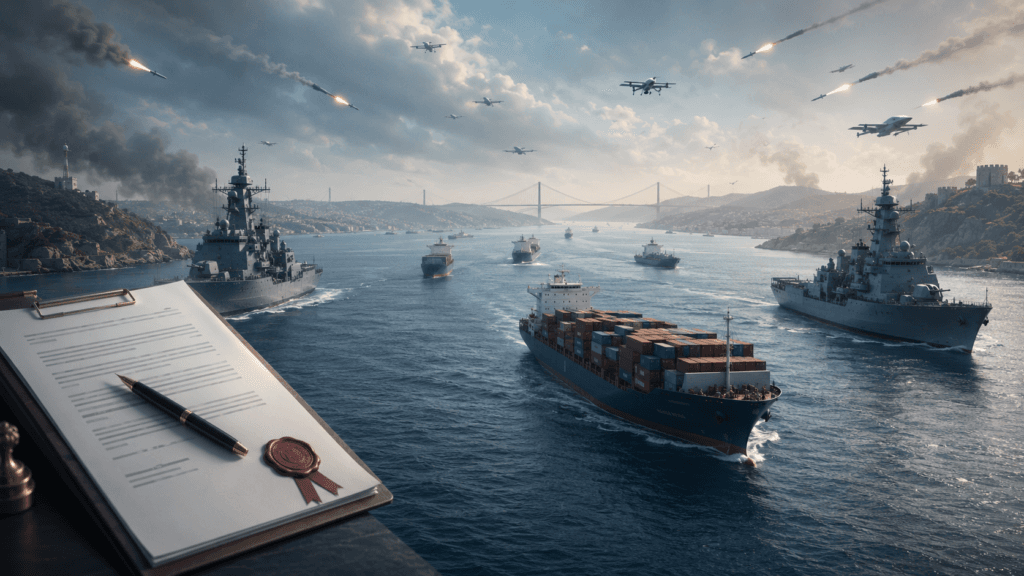
The ongoing situation in the Strait of Hormuz is fundamentally altering global maritime trade practices by normalizing a system of administered access. This shift is not a result of direct military confrontation or formal declarations of closure, but rather a consequence of financial and risk management decisions within the shipping insurance sector. Reinsurers have withdrawn coverage, prompting P&I clubs to issue 72-hour cancellation notices for vessels operating in the region. This has effectively created a scenario where access to the strait is selectively authorized, notably for tankers with Chinese affiliations, even though the waterway remains physically navigable.
This development signifies a departure from traditional concepts of freedom of navigation, introducing a new layer of geopolitical influence over commercial shipping. The crisis underscores how non-military actions, such as insurance market dynamics, can be leveraged to control maritime traffic in strategic choke points. The precedent set in Hormuz could have far-reaching implications for other contested waterways globally.
For freight forwarders and shippers, this situation translates into increased operational complexity and uncertainty. The availability and cost of war risk insurance for transiting the Strait of Hormuz will be a primary concern, potentially leading to higher freight rates and surcharges. Forwarders will need to meticulously verify insurance coverage for vessels, especially for sensitive cargo or specific trade lanes. The selective nature of access could also introduce delays and necessitate alternative routing strategies, impacting schedule reliability and supply chain planning. Furthermore, the precedent of 'administered access' could extend to other regions, requiring forwarders to constantly monitor geopolitical developments and their impact on maritime routes and insurance markets.
While the source does not explicitly state what comes next, the normalization of administered access suggests that future maritime crises may increasingly involve similar non-military controls. This could lead to a more fragmented and politically influenced global shipping landscape, where commercial viability is intertwined with geopolitical alignment and risk assessment by the insurance industry.