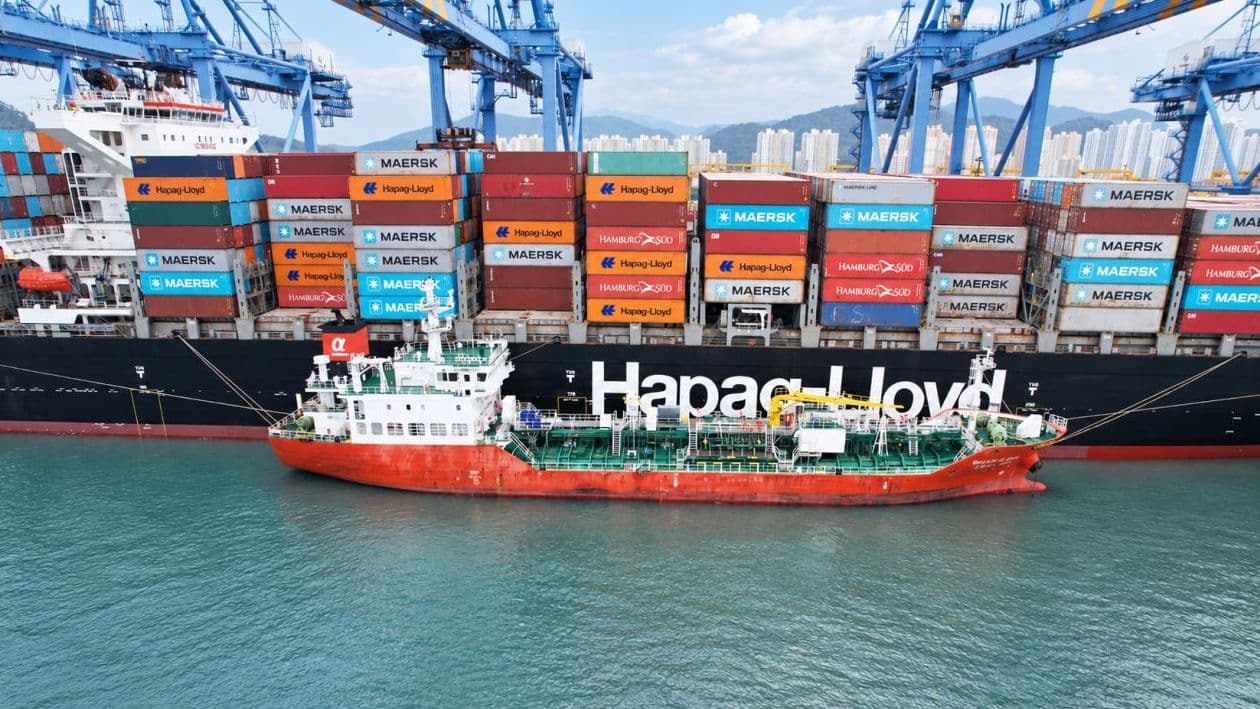
Hapag-Lloyd has successfully completed its first biomethanol bunkering operation, supplying ISCC EU-certified biomethanol to the 10,100-TEU container ship, Seaspan Amazon, in Busan, South Korea. This milestone involved a simultaneous operation (SIMOPS) while the vessel was in port, demonstrating the feasibility of integrating sustainable fuels into regular shipping schedules. Goldwind provided the biomethanol, which meets stringent European Union sustainability standards.
This development is part of Hapag-Lloyd's broader strategy to reduce its carbon footprint and transition towards more environmentally friendly shipping solutions. The use of biomethanol, a renewable fuel, is a key component in achieving the maritime industry's decarbonization targets.
For freight forwarders and shippers, this signifies a tangible step towards greener supply chains. While the immediate impact on rates or capacity might be minimal, the increasing adoption of alternative fuels by major carriers like Hapag-Lloyd indicates a future where sustainable shipping options will become more prevalent. This could eventually lead to differentiated services and potentially influence carrier selection for environmentally conscious clients. It also highlights the growing importance of fuel surcharges related to sustainable fuels.
This initial bunkering operation sets a precedent for future deployments of biomethanol as a marine fuel within Hapag-Lloyd's fleet, aligning with global efforts to reduce greenhouse gas emissions from shipping.