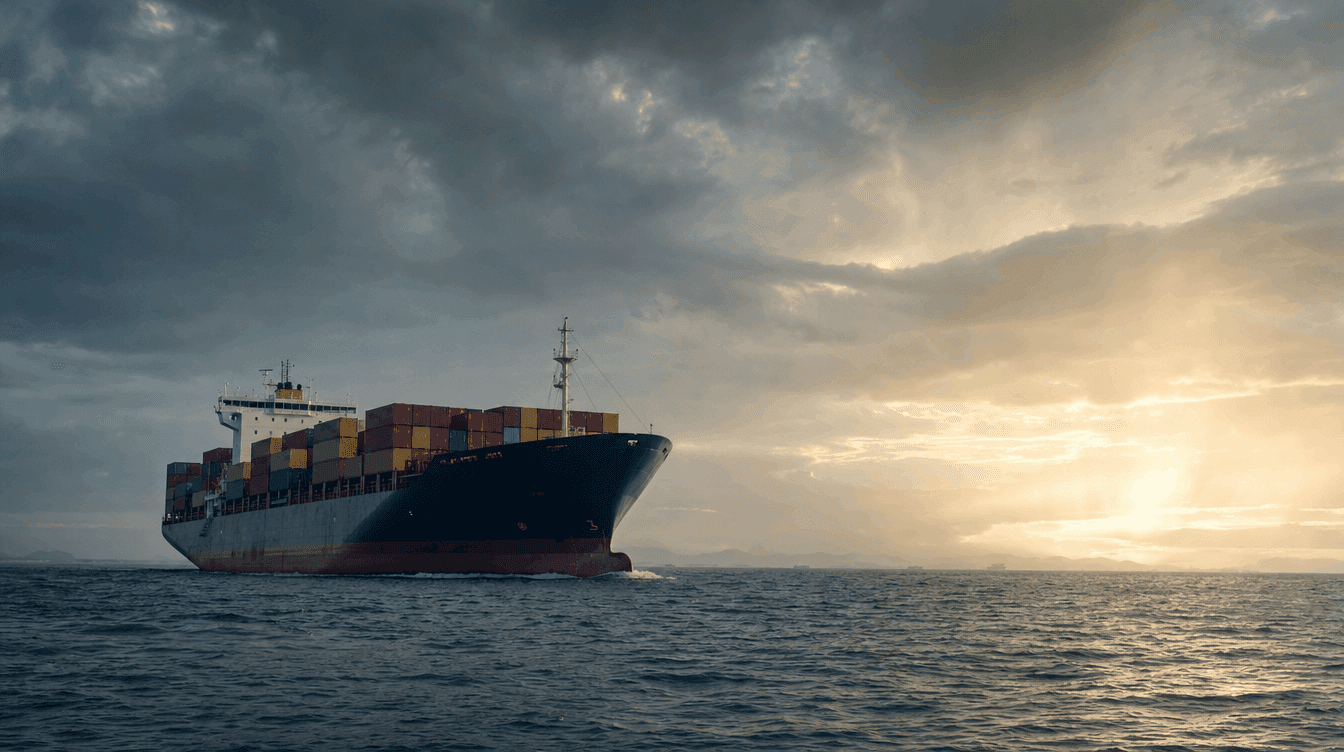
Global container shipping schedule reliability experienced a significant downturn in Q3, marking the fourth consecutive month of decline. On-time performance fell to 27%, matching February's low, while the average vessel delay across all arrivals increased to 6.0 days, a 2.4-day rise since the beginning of Q2. This deterioration is largely attributed to the compounding effects of powerful typhoons impacting Asian trades from July through early September, alongside strong peak season demand and rising bunker costs.
Key trade lanes, particularly those linked to Asia, saw their worst performance in 12 months. The Far East to Europe route plummeted to 4% on-time with an average delay of 9.9 days, its lowest since September 2021. The Far East to North America route remained flat at 20% on-time, but delays increased to 6.9 days. Conversely, South America West Coast and East Coast trades showed improvement, gaining 10-12 percentage points in reliability and reducing delays by up to 1.0 day. Europe to North America led with 49% on-time performance and the lowest average delay of 1.9 days.
For freight forwarders and shippers, these trends indicate persistent operational challenges and rising costs. Spot rates for China to US West Coast reached $7,717 per FEU in early October, more than four times the rate from September 2025, with long-term rates also seeing a 26% month-on-month increase. The extended delays are consuming buffer days in contracts and inventory plans, necessitating robust contingency strategies. With all carriers experiencing their highest average delays in 12 months, and the reliability gap between top and bottom performers narrowing, forwarders must scrutinize carrier performance closely during upcoming 2027 tender negotiations, especially for carriers charging a premium for service reliability. The decline of the Gemini network's reliability, falling from 70% to 40% on-time, highlights the widespread impact of these disruptions. Increased port congestion, particularly at Singapore, further exacerbates the situation, adding to transit times and operational complexities.