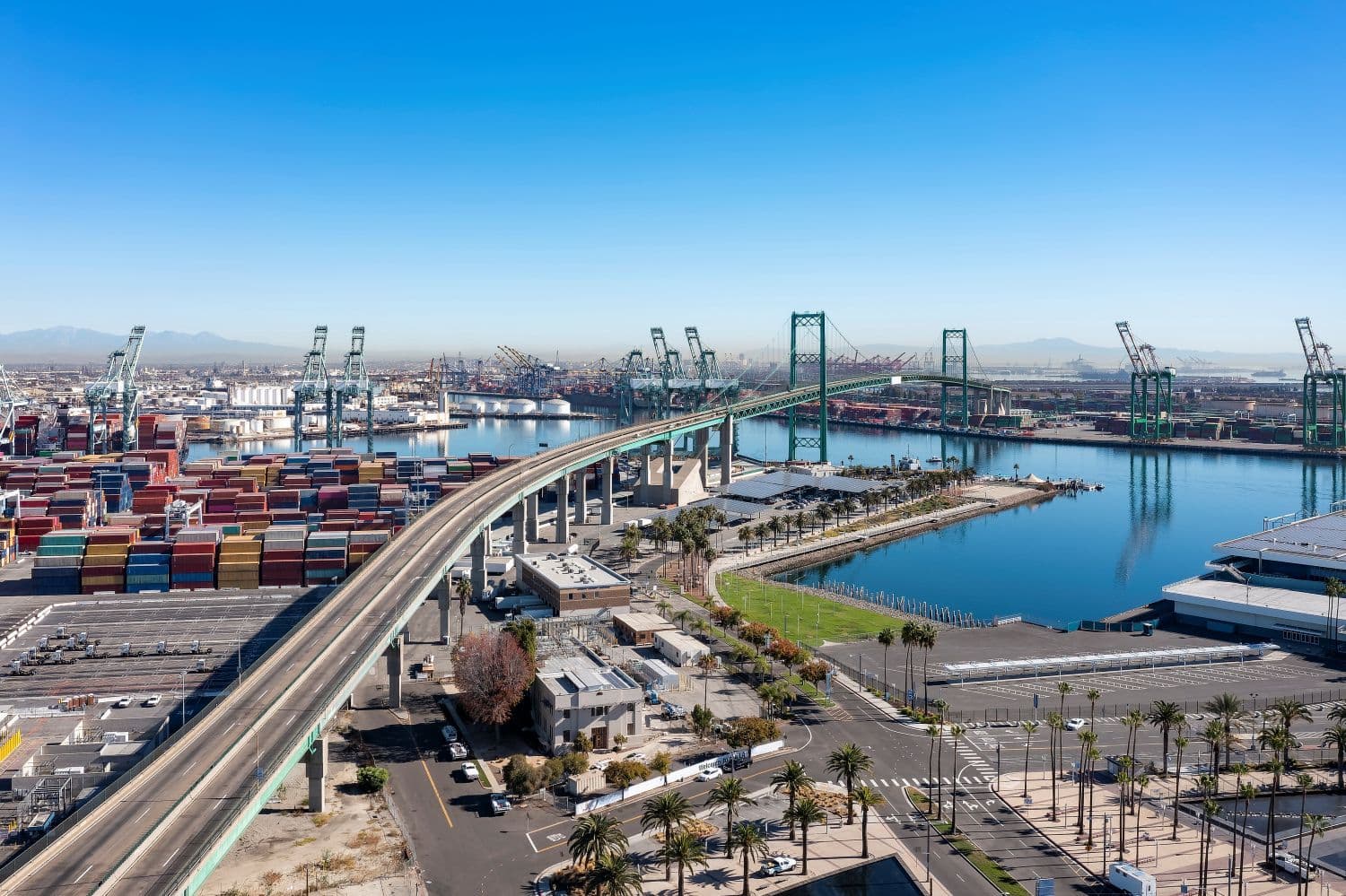
The Vincent Thomas Bridge, a critical artery for cargo movement within the Port of Los Angeles, is scheduled for closure on November 1 to undergo extensive redecking. This major infrastructure project is causing apprehension among various port stakeholders, particularly the trucking community, who foresee a significant exacerbation of existing operational challenges.
Container dwell times at the port are currently at their highest in 18 months, indicating pre-existing congestion and efficiency issues. The bridge closure is expected to divert traffic, potentially leading to longer transit times for trucks, increased fuel consumption, and greater strain on alternative routes and port gate operations. This could create bottlenecks, further delaying the movement of containers from terminals to their inland destinations.
For freight forwarders and operations managers, this development signals potential disruptions to supply chain schedules and increased costs. Shippers may experience longer lead times for cargo moving through Los Angeles, necessitating adjustments to inventory management and delivery expectations. Forwarders should proactively communicate with their trucking partners and clients about potential delays, explore alternative drayage strategies, and monitor port conditions closely. The added pressure on port infrastructure could also lead to demurrage and detention charges if containers are not moved efficiently.
While the article does not specify the duration of the bridge closure or any mitigation strategies planned by port authorities, the immediate impact will likely be felt in the weeks following November 1. Stakeholders will need to adapt quickly to minimize the operational and financial repercussions.