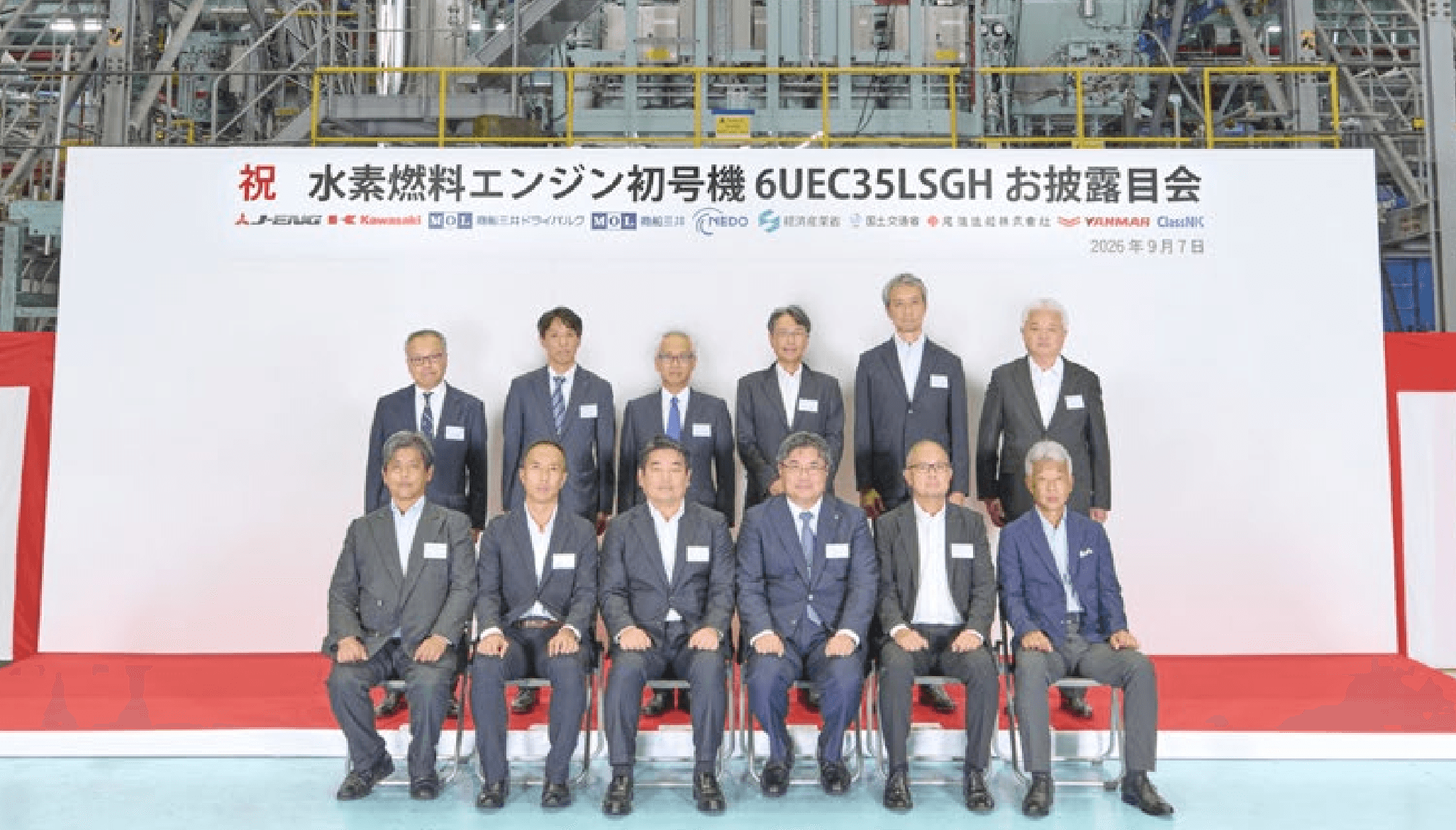
Japan Engine has successfully concluded land-based testing for a hydrogen-powered engine designed for large commercial vessels. The tests demonstrated a significant reduction in greenhouse gas (GHG) emissions, exceeding 95% compared to conventional engines. This development represents a crucial advancement in the maritime industry's efforts to achieve decarbonization goals.
The tested engine is scheduled for installation aboard a 17,500 DWT multipurpose vessel operated by MOL. This vessel will then participate in the 'BlueHarmony' sea demonstration project, anticipated to commence in 2028. The project aims to validate the engine's performance and reliability in real-world operational conditions.
For freight forwarders and operations managers, this news signals a future shift towards more sustainable shipping options. While the full impact on rates and capacity is still years away, the successful development of such technologies could eventually lead to new regulatory requirements for green fuels and potentially influence carrier selection based on environmental credentials. Forwarders should monitor these developments as they may affect vessel availability and routing choices in the long term, particularly for clients with stringent sustainability targets.