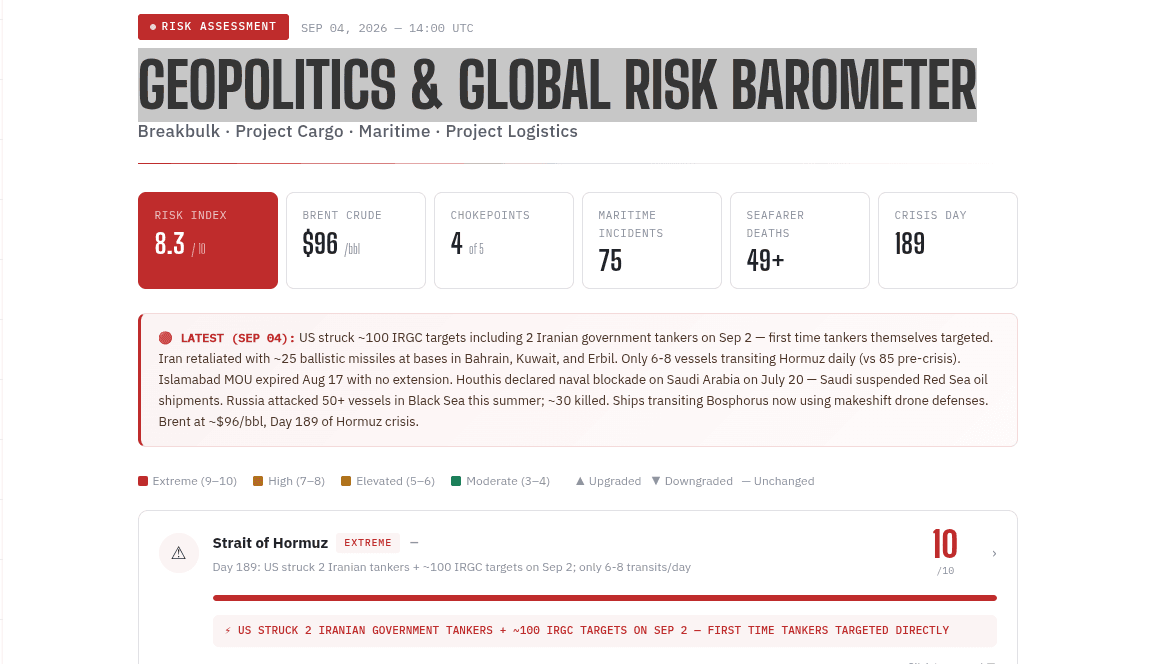
The global shipping risk index has reached 8.3, reflecting heightened dangers across key maritime trade arteries. This increase is attributed to the simultaneous escalation of crises in the Strait of Hormuz, the Red Sea, and the Black Sea. These converging geopolitical flashpoints are creating a complex environment for shipping and logistics companies, exposing them to elevated security threats, the complexities of international sanctions, and rising insurance costs.
For freight forwarders and operations managers, this situation translates into significant operational challenges. The convergence of these crises means that traditional and alternative shipping routes are increasingly constrained or subject to disruption. This can lead to longer transit times, increased fuel consumption, and higher operational expenditures due to diversions. Furthermore, the elevated risk environment is likely to result in higher war risk premiums for cargo insurance, directly impacting freight costs and potentially affecting the competitiveness of supply chains. Forwarders must closely monitor these developments and communicate proactively with shippers regarding potential delays, route changes, and cost adjustments.
The ongoing instability in these critical regions necessitates careful route planning and risk assessment. The limited availability of safe and efficient alternative routes amplifies the impact of each individual crisis, creating a cumulative effect on global maritime trade.