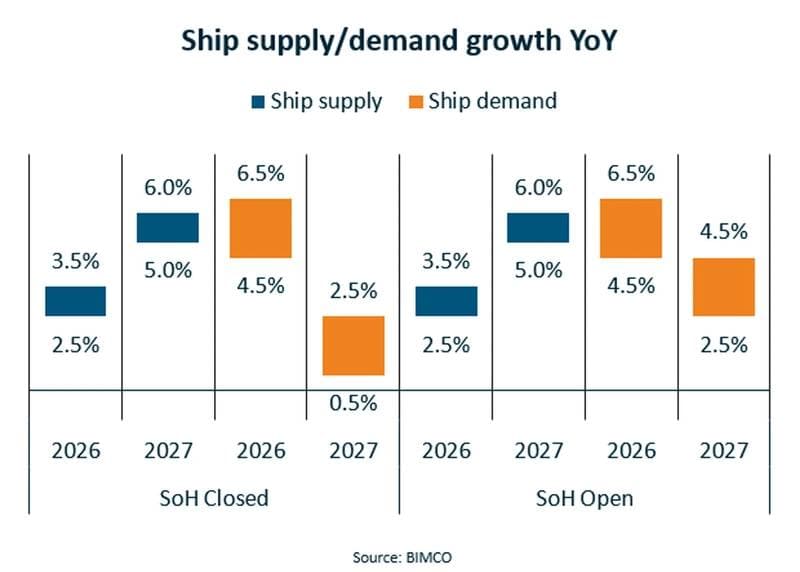
The container shipping sector is currently experiencing support from robust growth in head-haul trades and various market disruptions, a trend anticipated to continue through 2026. However, projections for 2027 indicate a significant shift, with an accelerating expansion of the global container fleet expected to put downward pressure on the supply/demand equilibrium. This analysis, provided by BIMCO's Chief Shipping Analyst Niels Rasmussen, suggests that while the immediate future remains stable, the medium term will present challenges due to oversupply.
For freight forwarders and operations managers, this outlook implies potential changes in freight rates and capacity availability. The anticipated weakening of the supply/demand balance in 2027 could lead to more competitive pricing and increased vessel space, offering shippers greater flexibility and potentially lower costs for ocean freight. Conversely, carriers might face reduced profitability and increased pressure to fill vessels. Forwarders should monitor new vessel deliveries and adjust their procurement strategies accordingly, potentially leveraging a buyer's market in the coming years.
BIMCO continues to develop two distinct scenarios to model these future market conditions, indicating a nuanced approach to forecasting the complex interplay of demand, supply, and external factors in the container shipping industry.