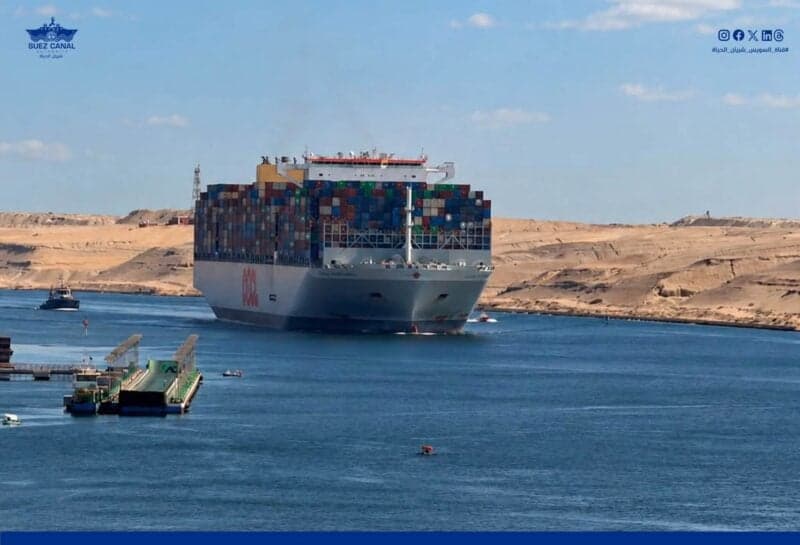
Container shipping lines are showing an increased willingness to transit the Suez Canal, with a notable example being the OOCL Portugal's recent passage. This comes amidst a backdrop of heightened security risks in the Red Sea, particularly due to Houthi military activities expanding around the critical Bab el-Mandeb strait.
For freight forwarders and operations managers, this development presents a mixed signal. While a return to the Suez Canal generally implies shorter transit times and potentially lower fuel costs compared to re-routing via the Cape of Good Hope, the persistent and escalating security threats in the Red Sea introduce significant operational risks. Forwarders must closely monitor carrier advisories regarding war risk premiums, potential diversions, and schedule reliability. The decision by carriers to use the Suez route suggests a calculated risk-benefit analysis, likely driven by pressure to maintain competitive transit times and capacity on key trade lanes, especially Asia-Europe.
Forwarders should anticipate continued volatility in transit times and potentially fluctuating war risk surcharges. It is crucial to maintain clear communication with shippers about potential delays or changes in routing, and to factor in the dynamic security situation when planning shipments through this vital maritime corridor.