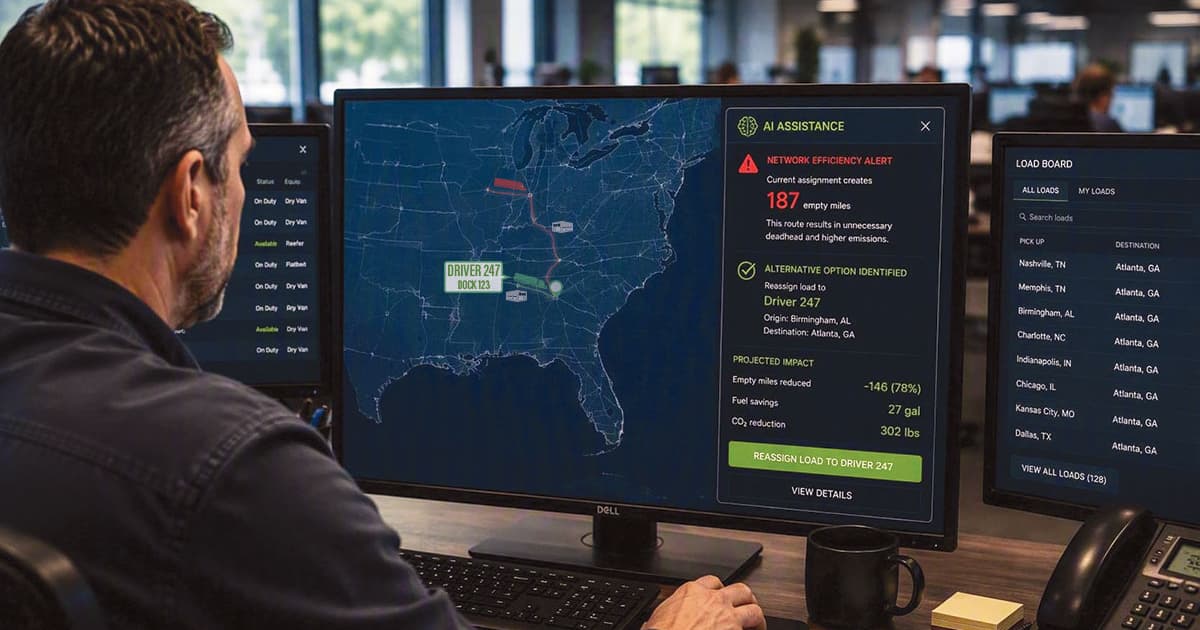
Modern trucking fleets are leveraging artificial intelligence to refine operational decisions, particularly in how loads are matched and how their networks are optimized. By employing AI, companies can make more informed choices, leading to a significant reduction in empty or partially loaded miles. This technological integration helps streamline logistics, ensuring that trucks operate at maximum efficiency.
For freight forwarders and operations managers, this trend signifies a move towards more data-driven and sustainable road freight solutions. The emphasis on minimizing mileage directly impacts fuel costs and operational expenses, potentially leading to more competitive pricing for road transport services. Furthermore, improved network optimization can enhance schedule reliability and transit times, offering better service levels to shippers. As AI adoption grows, forwarders may see a greater ability to track and report on the carbon footprint of their road shipments, aligning with increasing sustainability demands from clients.