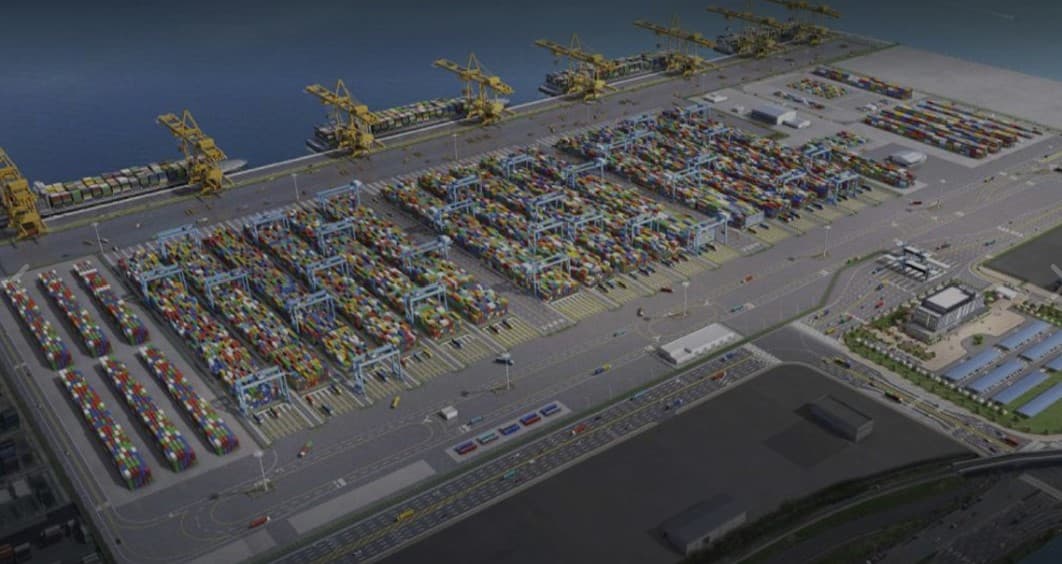
South Korea has officially started the construction phase for the Gwangyang Port Automation Testbed. This ambitious project, with an investment of KRW772.4 billion, is designed to establish a fully automated container terminal capable of handling 1.36 million TEUs annually. Beyond its operational capacity, the testbed will function as a proving ground for next-generation port technologies, particularly those integrating artificial intelligence.
For freight forwarders and operations managers, this development signifies a future increase in efficiency and potentially faster vessel turnaround times at Gwangyang. Automated terminals typically lead to more predictable port calls and reduced labour-related disruptions. While the immediate impact on rates or capacity is not direct, the long-term goal is to enhance the port's competitiveness and operational fluidity, which could indirectly benefit supply chain planning and reliability for shipments routed through South Korea.