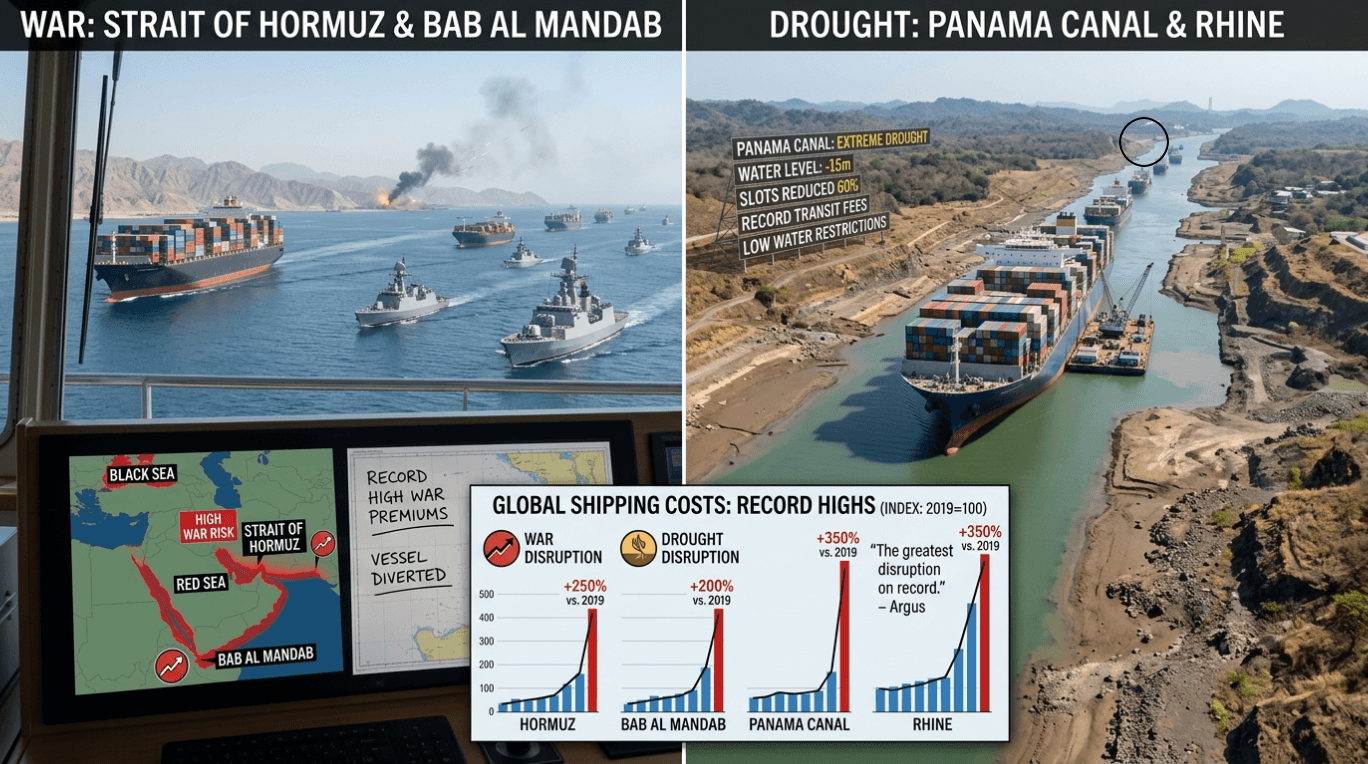
Ongoing geopolitical conflicts and persistent drought conditions are significantly impacting global shipping, leading to record-high freight rates in crucial maritime passages. The Strait of Hormuz, Panama Canal, and Rhine River are experiencing substantial cost increases for both tanker and container shipments. These disruptions are primarily due to security concerns necessitating diversions, as well as low water levels impeding navigation.
For freight forwarders and operations managers, this situation translates into higher operational costs and increased transit times. The need for rerouting vessels around conflict zones or through alternative, less efficient routes due to drought-induced restrictions directly impacts scheduling and delivery commitments. Shippers should anticipate elevated freight expenditures and potential delays, requiring proactive communication with clients and flexible logistics planning. Capacity could also be affected on certain lanes as carriers adjust their networks to mitigate risks and operational constraints. The continued volatility underscores the importance of diversified routing strategies and robust risk assessment in supply chain management.