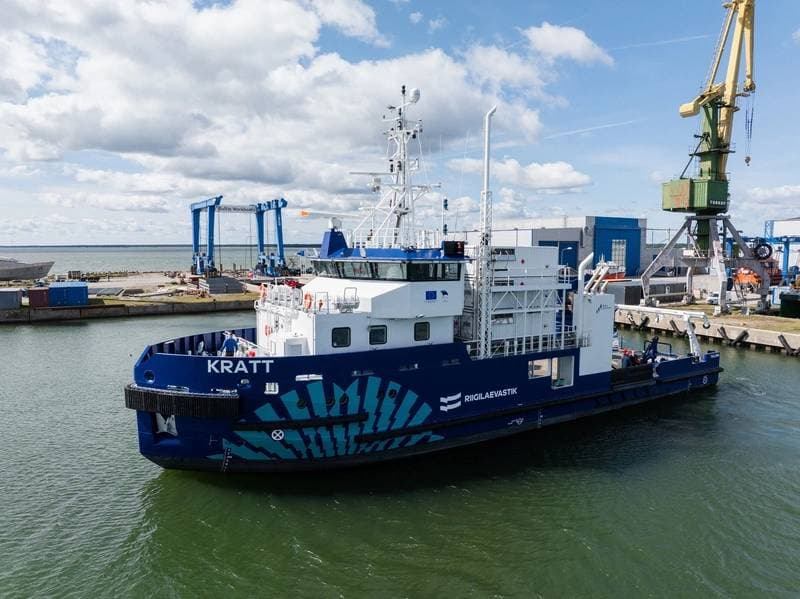
Estonia has recently received a new 38-meter multipurpose workboat named KRATT. This vessel is notable for its innovative propulsion system, which combines compressed biomethane with battery-electric power, making it a more environmentally friendly option for maritime operations. The KRATT is also ice-class rated, indicating its capability to operate in icy conditions.
This new vessel is designed to perform a wide array of functions crucial for Estonia's maritime infrastructure and environmental protection. Its capabilities include conducting research, handling buoys, responding to pollution incidents, and executing rescue missions. The integration of these diverse functions into a single vessel enhances operational efficiency and flexibility for the Estonian authorities.
For freight forwarders and logistics professionals, while this specific vessel is not directly involved in commercial cargo transport, its deployment signifies a broader trend towards greener shipping solutions and advanced maritime technology. Increased national maritime capabilities, particularly in ice-prone regions, can indirectly support safer navigation and potentially more reliable coastal logistics infrastructure in the long term. The use of biomethane highlights a commitment to reducing emissions, aligning with global sustainability goals that may influence future port and vessel requirements.