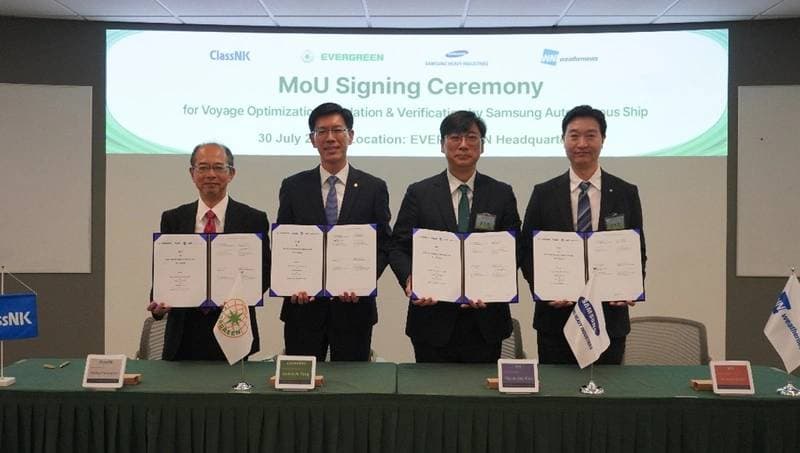
ClassNK has announced its participation in a collaborative project focused on the objective validation of fuel efficiency and greenhouse gas (GHG) emission reductions in real-world vessel operations. This initiative specifically targets the performance of AI-powered autonomous navigation systems, seeking to provide concrete evidence of their environmental benefits.
The maritime industry is under increasing pressure to decarbonize, with regulatory bodies and public opinion demanding more sustainable shipping practices. AI-based navigation systems offer a promising avenue for optimizing vessel routes, speeds, and maneuvers, thereby reducing fuel burn and associated emissions. However, independent verification of these claims is crucial for widespread adoption and regulatory acceptance.
For freight forwarders and logistics professionals, the successful validation of such technologies could lead to more predictable transit times and potentially lower fuel surcharges as carriers adopt more efficient systems. Improved fuel efficiency directly translates to reduced operational costs for shipping lines, which can indirectly benefit shippers through more stable or competitive freight rates. Furthermore, the ability to demonstrate quantifiable emissions reductions will be increasingly important for supply chain sustainability reporting and compliance with evolving environmental regulations.
While the article does not specify next steps, the project's findings are expected to inform future technology development and regulatory frameworks, potentially accelerating the integration of AI and autonomous solutions into mainstream shipping operations.